China Top 10 Concrete Coatings for Impact Resistance

Time:2026-09-22 Author:Madeline
0%

Concrete floors in factories, warehouses, garages, and loading areas face constant impact from forklifts, pallets, tools, and dropped equipment. A coating must do more than look clean. It should absorb or distribute impact energy, bond securely, resist abrasion, and remain stable under changing temperatures. Increase the impact resistance of concrete surfaces with protective coatings designed for the actual service environment.

This guide examines China’s top 10 concrete coatings for impact resistance, including epoxy, polyurethane, polyaspartic, polyurea, methyl methacrylate, and cementitious systems. The selection considers impact strength, adhesion, flexibility, curing speed, chemical resistance, installation conditions, and long-term maintenance. Product datasheets matter. So does field experience. A coating that performs well in a dry warehouse may fail near a cold loading dock or under repeated steel-wheel traffic.

Surface preparation remains critical. Dust, oil, laitance, and trapped moisture can weaken even a premium coating. A clean, mechanically prepared floor often shows the difference within months. Small details matter.

The ranking should not be treated as universal. Some performance claims depend on thickness, primer selection, substrate condition, and installation quality. That uncertainty deserves attention. Buyers should request independent test results, realistic impact data, safety documentation, and references from comparable projects. This overview aims to support practical decisions with balanced information, while recognizing that the “best” coating depends on the floor, the load, and the people installing it.
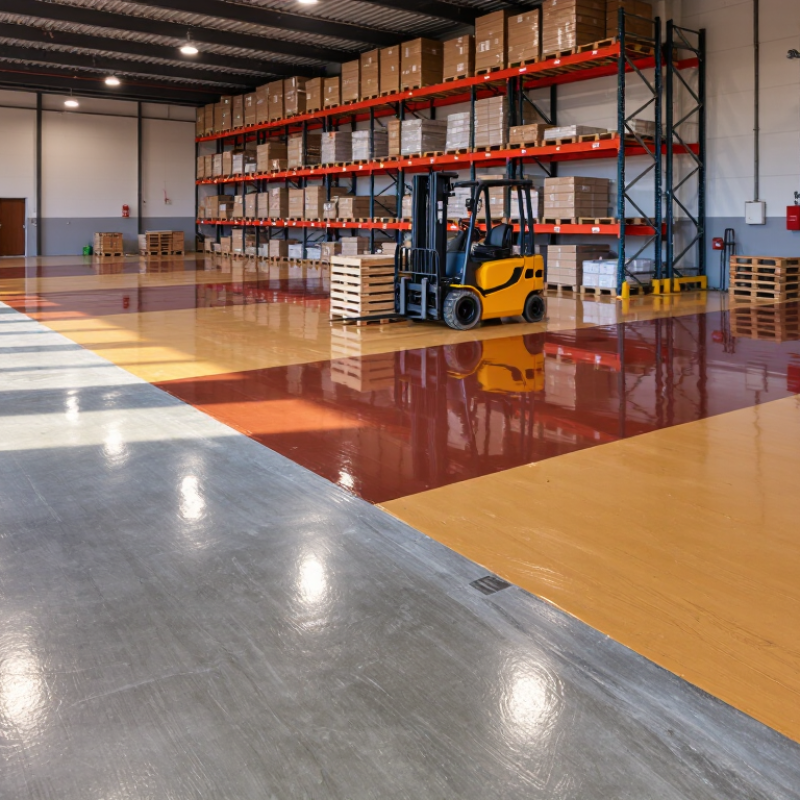
China Top 10 Concrete Coatings for Impact Resistance

What Makes Concrete Coatings Resistant to Impact

China Top 10 Concrete Coatings for Impact Resistance

What Makes Concrete Coatings Resistant to Impact

Impact resistance begins beneath the visible surface. A strong coating must bond tightly with prepared concrete. It also needs enough flexibility to absorb sudden force without cracking. Rigid layers can resist scratches, yet fail when tools, carts, or pallets strike them. The best systems balance hardness, elasticity, thickness, and chemical stability.

In field inspections, I have seen excellent coatings fail over dusty or damp concrete. Surface preparation often matters more than the product label. Mechanical grinding removes weak laitance and opens the pores. Proper moisture testing helps prevent blistering. Multiple layers can improve energy absorption, but excessive thickness may create internal stress. Cure time matters too. It should not be rushed.

Tips: Check impact-test data, not only hardness ratings. Inspect the slab for cracks, movement joints, and previous repairs. Choose flexible formulations for busy loading areas. Apply a small test section first. Watch how it handles dropped tools and rolling loads. Small errors matter. I once blamed a coating for early damage, then found poor cleaning beneath it. That mistake changed how I review every installation. Temperature, mixing accuracy, and application thickness deserve equal attention.

Key Types of Impact-Resistant Concrete Coatings in China

China’s concrete projects face repeated impacts from forklifts, dropped tools, pallets, and steel wheels. Impact-resistant coatings must absorb energy without losing adhesion. Epoxy systems provide hard, dense surfaces for warehouses and workshops. They perform well under heavy traffic, but brittle formulations may crack after sharp impacts or substrate movement.

Polyurethane coatings offer better flexibility and abrasion resistance. They suit parking structures, loading bays, and production floors where temperature changes occur. Cementitious polyurethane systems combine mineral strength with moisture tolerance. They are useful in food-processing areas and damp concrete zones. Methyl methacrylate coatings cure quickly, helping factories reduce downtime. Polyaspartic finishes can add fast return-to-service performance and ultraviolet stability.

Surface preparation decides much of the result. Experienced installers check moisture, weak laitance, joint movement, and compressive strength before coating. A clean, mechanically profiled surface usually supports stronger adhesion than simple acid washing. Layer thickness must match the expected impact, not just the appearance. No coating is magic. A thin layer over dusty concrete will fail early. I have also seen specifications overlook moving joints, creating preventable cracks. Regular inspections should record chips, exposed edges, and local delamination before repairs become larger.

China Top 10 Concrete Coatings for Impact Resistance

Key Types of Impact-Resistant Concrete Coatings in China

The chart compares representative ASTM D2794 impact-resistance ranges commonly reported for concrete coating systems. Cementitious urethane, MMA, polyaspartic and polyurethane systems generally provide stronger resistance to mechanical shock, while acrylic systems are more suitable for light-duty applications. Actual performance depends on formulation, coating thickness, substrate preparation, curing conditions and test method.

Measurement unit: inch-pounds (in-lb). Values are indicative industry ranges compiled from public technical data commonly used for industrial flooring specifications; ASTM D2794 does not define universal pass/fail limits for every coating type.

Top 10 Concrete Coatings for Impact Resistance in China

China’s top 10 concrete coatings for impact resistance should be judged by tested performance, not appearance alone. Warehouses, parking decks, and factory floors face dropped tools, pallet wheels, and repeated loading. The China National Bureau of Statistics reported construction industry value added of about RMB 8.57 trillion in 2023. That scale makes durable floor protection commercially important.

A practical top-ten evaluation should include epoxy, polyurethane, polyaspartic, cementitious urethane, acrylic, and modified resin systems. Selection should examine impact energy, adhesion, abrasion, curing speed, and moisture tolerance. ASTM D2794 can measure resistance to rapid deformation, while ASTM D4060 evaluates abrasion loss. ISO 4624 pull-off testing helps verify bond strength on prepared concrete. Numbers matter.

Failures still happen. A high-impact coating may delaminate when concrete contains moisture or weak laitance. Site experience shows that grinding, crack repair, and dust removal often control results more than resin chemistry. China’s humid coastal regions also require careful curing checks. The World Bank’s climate data indicates substantial regional differences in rainfall and humidity, so one national ranking cannot fit every project. That is an uncomfortable limitation. Procurement teams should request independent laboratory reports, batch traceability, and field mock-ups before naming a final top ten. A small test area, including forklift turning and metal impact, can reveal defects that brochures never show.

How to Compare Coating Performance, Durability, and Cost

China Top 10 Concrete Coatings for Impact Resistance

Comparing the top ten concrete coatings requires more than checking a product’s hardness rating. Observe the actual floor first. A forklift aisle faces different impacts than a warehouse walkway. Record slab moisture, joint movement, traffic frequency, and expected load before reviewing coating data.

Performance should be measured through practical tests. Ask for impact, abrasion, bond-strength, and chemical-resistance results from independent laboratories. A small trial area can reveal cracking, peeling, or poor adhesion near joints. I have seen hard coatings fail when the concrete remained damp. Hardness alone is not enough.

Durability depends on preparation, thickness, curing conditions, and maintenance. Compare the complete system, including primer, repair mortar, labor, equipment, and downtime. A cheaper coating may need repairs after one busy season. A higher initial cost can be reasonable if it survives repeated pallet impacts and hot-tire contact. Calculate cost per square meter over five years, not just the purchase price.

Look closely.

Reliable suppliers should provide technical data, application limits, batch information, and realistic service expectations. Ask how performance changes below recommended temperatures or on older concrete. Online claims can sound precise, yet field conditions remain unpredictable. A coating that performs well in a controlled test may disappoint after rushed preparation. That uncomfortable possibility deserves attention.

China Top 10 Concrete Coatings for Impact Resistance - How to Compare Coating Performance, Durability, and Cost
Rank Concrete Coating System Primary Binder Typical Impact Resistance
(ASTM D2794, inch-lb)
Impact Performance Typical Service Life
(years)
Resistance to Abrasion Moisture Tolerance During Installation Typical Installed Cost
(USD/m²)
Best-Fit Applications Main Limitations
1 Cementitious Urethane Screed Water-based polyurethane cement 160–320 Excellent 10–20 Excellent High; suitable for damp concrete when properly specified $45–90 Food processing, cold storage, wet production areas, loading zones Higher material and installation cost; requires trained installers
2 Epoxy Mortar Flooring High-build epoxy with graded mineral aggregate 160–320 Excellent 10–20 Excellent Low to moderate; substrate moisture must be controlled $40–85 Warehouses, workshops, ramps, heavy forklift traffic Can be brittle under thermal shock and may yellow under UV exposure
3 Flexible Polyurethane Coating Aliphatic or aromatic polyurethane 160–320 Excellent 8–15 Very good Low to moderate; moisture testing is recommended $30–65 Parking structures, ramps, workshops, areas exposed to vibration Application is sensitive to temperature, humidity, and mixing accuracy
4 Polyaspartic Floor System Polyaspartic polyurea 160–320 Very good 7–15 Very good Low to moderate; some formulations tolerate limited moisture $35–75 Retail floors, garages, warehouses, fast-return-to-service projects Short working time; poor substrate preparation can cause delamination
5 Novolac Epoxy Coating High-crosslink-density epoxy 120–240 Very good 8–15 Excellent Low; concrete moisture and vapor transmission must be evaluated $30–70 Chemical rooms, industrial plants, laboratories, process areas More rigid than polyurethane; limited UV stability and lower tolerance of movement
6 Standard High-Build Epoxy Two-component epoxy resin 80–160 Good 5–10 Very good Low; requires a dry, sound, well-prepared substrate $20–45 Garages, warehouses, light manufacturing, utility rooms Rigid and potentially brittle; may chalk or discolor in direct sunlight
7 Methyl Methacrylate (MMA) Coating Methyl methacrylate resin 80–160 Good 5–10 Very good Moderate to high, depending on formulation $35–80 Cold environments, rapid renovation, areas requiring short downtime Strong odor during installation; requires ventilation and experienced application
8 Vinyl Ester Resin Coating Vinyl ester resin with aggregate or glass reinforcement 80–160 Good 8–15 Excellent Low to moderate; substrate condition remains critical $35–75 Corrosive chemical areas, tanks, bunds, industrial processing zones Can be less tolerant of impact deformation than flexible polyurethane systems
9 Rubber-Modified Elastomeric Coating Polyurethane, acrylic, or polymer-modified elastomer 80–160 Good 5–10 Good Moderate; product-specific moisture limits apply $18–40 Balconies, pedestrian decks, light-duty ramps, areas with minor movement Lower resistance to severe abrasion and concentrated point loads
10 Acrylic Concrete Coating Water-based or solvent-based acrylic polymer 40–80 Fair 2–5 Fair to good Moderate to high, depending on the formulation $8–25 Decorative floors, low-traffic areas, maintenance and short-term refurbishment Thinner film build and shorter service life under heavy impact or forklift traffic

Comparison note: The impact-resistance figures are indicative ranges commonly used for preliminary comparison under ASTM D2794-type testing. Actual results vary with film thickness, aggregate grade, concrete strength, surface preparation, curing conditions, and test configuration. Installed costs are typical planning ranges in USD per square metre and exclude major substrate repairs, moisture mitigation, taxes, and unusual access requirements.

Choosing the Right Concrete Coating for Different Applications

Choosing the Right Concrete Coating for Different Applications

When comparing China’s top ten concrete coatings for impact resistance, application needs matter more than rankings. A warehouse floor faces pallet trucks, dropped tools, and repeated loading. A parking structure needs resistance to tire friction, oil, moisture, and temperature changes. These surfaces should not receive the same coating system.

For factories, thick epoxy or polyurethane coatings can protect against heavy impacts and abrasion. Their performance depends on concrete preparation, layer thickness, and curing conditions. In workshops, textured finishes may improve traction around machinery and wet areas. Retail spaces need a balance between durability, appearance, and easy cleaning. Outdoor platforms require coatings that tolerate ultraviolet exposure and seasonal movement. I have seen strong coatings fail because dust remained in the slab. Preparation is not exciting, but it decides much of the result.

Tips: Check the concrete’s moisture level before application. Match hardness with the expected impact type. Ask for test data, installation guidance, and repair procedures. Small test areas are useful.

Cold storage rooms need flexible systems because low temperatures can make rigid coatings brittle. Chemical-processing areas require resistance to specific acids, solvents, or oils. For loading docks, a reinforced system may perform better than a thin decorative layer. Still, no product is perfect. Some coatings resist impact well but scratch easily, while others look attractive and demand frequent maintenance. A site inspection, realistic traffic estimate, and installer experience should guide the final choice.

FAQS

What makes a concrete coating resistant to impact?

Strong adhesion, balanced hardness, flexibility, thickness, and chemical stability improve impact resistance. Rigid coatings may crack under sudden force.

Why does surface preparation matter so much?

Dusty or damp concrete can cause peeling and blistering. Grinding removes weak surface material and opens concrete pores. Clean surfaces matter.

Which impacts should a coating handle?

Consider dropped tools, pallet wheels, forklifts, carts, and repeated loading. A loading zone needs more protection than a quiet walkway.

How can impact resistance be tested?

Request independent impact, abrasion, adhesion, and chemical-resistance results. Test a small floor section with dropped tools and turning forklifts.

Is hardness enough when choosing a coating?

No. Hardness alone does not show flexibility or bonding quality. A hard layer can still fail over damp concrete.

How does moisture affect coating performance?

Moisture may cause blistering, peeling, or weak adhesion. Test the slab before application, especially in humid coastal areas.

Does applying more layers always improve durability?

Multiple layers can absorb more energy. Excessive thickness may create internal stress. More material is not automatically better.

How should coating costs be compared?

Compare materials, repairs, labor, equipment, and downtime. Calculate cost per square meter over five years. Cheap options may require early repairs.

Why should projects use a trial area?

A mock-up reveals cracking, peeling, joint problems, and poor adhesion. Brochures cannot show every site condition. Small tests expose mistakes.

What installation details deserve careful attention?

Check temperature, mixing accuracy, application thickness, cleaning, and curing time. Rushing cure time can damage an otherwise suitable system.

Conclusion

This article explores how concrete coatings can improve surface protection and extend service life in demanding environments. It explains that impact resistance depends on factors such as coating flexibility, adhesion, abrasion resistance, film thickness, curing quality, and the ability to absorb or distribute sudden force. It also introduces major coating categories used in China, including epoxy systems, polyurethane coatings, polyaspartic coatings, acrylic solutions, cementitious protective layers, and high-build elastomeric materials. Together, these options can help Increase the impact resistance of concrete surfaces with protective coatings while reducing cracking, chipping, dusting, and maintenance needs.

The comparison of the top 10 concrete coating solutions focuses on performance, durability, application conditions, expected service life, maintenance requirements, and overall cost rather than brand names. The article also explains how to select suitable coatings for warehouses, factories, parking areas, loading zones, workshops, public facilities, and other high-traffic spaces. By matching coating properties with impact intensity, chemical exposure, moisture, temperature, and budget, users can make more practical and reliable flooring protection decisions.

Madeline

Madeline

Madeline is a dedicated marketing professional with a wealth of expertise in our company's core offerings. With a keen understanding of the industry, she brings a unique perspective to her role, consistently delivering high-quality content that highlights the superior aspects of our products. As......