Enhance Self Leveling Grouts and Mortars for Better Finish?

Time:2026-06-10 Author:Isabella
0%

In the ever-evolving construction industry, the quest to improve the smoothness and finish of self-leveling grouts and mortars is crucial. John Smith, a renowned expert in construction materials, emphasizes, "The right blend can elevate the quality of finishes." This highlights the necessity for innovation in product formulations that not only meet standards but also enhance aesthetic appeal.

Achieving a flawless surface requires attention to detail. Self-leveling compounds should be carefully mixed and applied to minimize imperfections. Even small variations can lead to significant issues, affecting both appearance and durability. Professionals must continually assess their methods to ensure they are utilizing the best practices available.

While advancements in technology provide new solutions, the traditional methods still hold value. Balancing innovation with proven techniques can be challenging. The industry must remain open to exploring both old and new approaches. Striving for perfection in this field is not just about the finish; it’s about reliability and long-term performance.
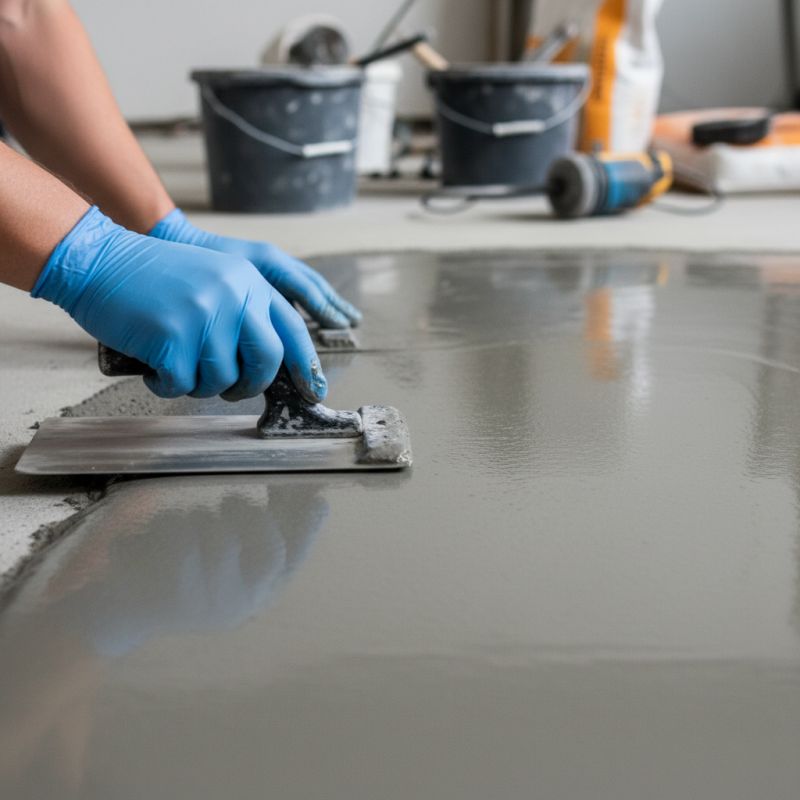
Enhance Self Leveling Grouts and Mortars for Better Finish?

Understanding Self Leveling Grouts and Mortars: A Comprehensive Overview

Self leveling grouts and mortars are essential for achieving a smooth surface. Understanding their properties helps in selecting the right product for your project. These materials are designed to flow and fill gaps. They can create a perfectly level surface, but improper application may lead to issues.


Application requires attention to detail. The substrate must be clean and even. Even minor debris can affect the finish. It's crucial to mix the grout or mortar correctly. Under-mixing can result in clumps or insufficient strength. Over-mixing, on the other hand, can lead to bubbles, compromising the surface integrity.


Choosing the right thickness is also vital. Some formulations may not perform well at certain depths. It’s essential to consult technical specifications. Additionally, factors like temperature and humidity affect curing times. Unexpected environmental conditions can hinder your project. Thus, careful planning is key, ensuring a reliable and professional finish.

Key Characteristics of Effective Self Leveling Products

Choosing the right self-leveling grout or mortar can significantly impact your flooring project. Effective self-leveling products should possess some key characteristics. First, they must spread easily across the surface. A smooth application not only saves time but also reduces labor costs. Even beginners can achieve a decent finish with a product that boasts excellent flow characteristics.

Another crucial aspect is the setting time. Quick-setting options are ideal for tighter schedules, allowing for faster project completion. However, rushed work might lead to mistakes. It’s essential to find a balance between speed and quality. Products that allow some working time help in achieving a perfect finish.

Durability is a non-negotiable trait. Grouts and mortars must withstand the test of time. If not, repairs can become costly. Always look for performance under various conditions. Self-leveling products should resist moisture and temperature changes. Some options may seem high-performing but lack reliability in real-world applications. Testing different products can yield surprising insights that could improve overall performance.

Techniques for Enhancing the Performance of Grouts and Mortars

Enhancing the performance of grouts and mortars can significantly improve flooring and wall finishes. Professional studies reveal that self-leveling grouts can minimize the risk of cracks and uneven surfaces. According to the National Association of Home Builders, approximately 50% of installation issues stem from poor substrate preparation. Ensuring an even base leads to optimal results.

Various techniques exist to enhance grout and mortar performance. Adding polymer modifiers boosts adhesion and flexibility, reducing the likelihood of failure. Recent data shows that polymer-enhanced grouts perform 30% better in elasticity tests. Additionally, maintaining appropriate temperature and humidity levels during application can prevent improper curing, leading to superior strength and durability.

Despite these advancements, challenges remain. Some mixtures may still exhibit inconsistent performance due to environmental factors. Inconsistent mixing ratios may lead to unwanted texture or settling issues. Ongoing research into additives and ratios is crucial to address these imperfections. Industry experts emphasize the need for continuous innovation to meet evolving standards.

Application Methods for Achieving a Superior Finish

Self-leveling grouts and mortars are essential in many construction projects, providing a smooth surface for various finishes. To achieve a superior finish, proper application methods are crucial. Begin by preparing the substrate thoroughly. Ensure that it is clean, dry, and free from debris. Any flaws or imperfections should be repaired in advance to avoid complications later on.

Mixing the self-leveling compound correctly is vital. Follow the manufacturer's guidelines for water and powder ratios. An inconsistency in the mixture can lead to issues. Pour the mixture onto the designated area and use a gauge rake to spread it evenly. Ensure the layer is uniform and avoid air bubbles. Observing the curing time is equally important. Temperature and humidity can affect the drying process significantly.

Regularly check for imperfections during the application. Take your time and don’t rush the process. It's common to overlook small details that can lead to a less-than-perfect finish. Always be ready to make adjustments. A critical eye can help rectify any issues as they arise. Continuous learning and improvement in techniques can significantly enhance the quality of your work.

Common Challenges and Solutions in Self Leveling Processes

Self-leveling grouts and mortars offer a sleek finish, but challenges remain. One common issue is improper mixing. Studies reveal that up to 30% of installations fail due to incorrect water-to-powder ratios. A precise mix is vital for achieving the desired consistency and flow. Too much water can weaken the bond, leading to cracks and uneven surfaces.

Temperature fluctuations also hinder the self-leveling process. When temperatures fluctuate, the material may set unevenly. Reports indicate that temperatures below 50°F can delay setting times, causing further complications. Contractors should monitor temperature closely to ensure optimal conditions. Additionally, environmental factors like humidity can affect performance. High moisture levels can lead to issues such as efflorescence or surface bubbling.

Another challenge is surface preparation. Many overlook the importance of a clean substrate. Debris and dust can inhibit adhesion, resulting in cosmetic defects. Research suggests that up to 15% of failures stem from inadequate surface preparation. It’s essential to address these concerns early. Regular site assessments can prevent future problems, ensuring a successful installation and a flawless finish.

Enhance Self Leveling Grouts and Mortars for Better Finish? - Common Challenges and Solutions in Self Leveling Processes

Challenge Impact Common Solutions
Inadequate Flow Uneven surface finish Use of appropriate additives to enhance fluidity
Air Bubbles Weak spots and surface imperfections Vacuum mixing and proper installation techniques
Cracking Structural instability Use of flexible additives and reinforcing mesh
Poor Bonding Delamination from substrate Surface preparation and priming methods
Curing Issues Incomplete set and performance degradation Control moisture levels and temperature during curing

FAQS

: What should I look for in self-leveling products?

: Key characteristics include easy spreading, quick-setting time, and durability under various conditions.

Why is the setting time important?

Quick-setting options can speed up projects, but balance is crucial to avoid mistakes.

How do I ensure a smooth finish?

Prepare the substrate by cleaning it and fixing any imperfections before applying the self-leveling compound.

What happens if the mixture is inconsistent?

An inconsistent mixture can lead to issues in the quality of the surface finish.

How can I avoid air bubbles during application?

Use a gauge rake to spread the mixture evenly and pay attention to detail during application.

Why is it essential to check for imperfections?

Small details can lead to a poor finish; regularly inspect and adjust as necessary.

Can temperature and humidity affect drying times?

Yes, both can significantly influence the curing process; check conditions regularly.

What are the risks of rushing the application?

Rushing can lead to mistakes and a less-than-perfect finish, undermining project quality.

How can I improve my self-leveling techniques?

Continuous learning and practice can enhance work quality over time.

Why is testing products important?

Testing different products can reveal reliability and performance that might surprise you.

Conclusion

This article provides a comprehensive overview of self-leveling grouts and mortars, focusing on their key characteristics and the techniques that can be employed to enhance their performance. It outlines methods to improve the smoothness and finish of self-leveling grouts and mortars, emphasizing the importance of proper application techniques. Additionally, common challenges in the self-leveling process are identified along with effective solutions, ensuring that users can achieve a superior finish in their projects. The insights presented help both professionals and DIY enthusiasts enhance their results when working with these materials.

Isabella

Isabella

Isabella is a dedicated marketing professional with a sharp focus on driving brand growth and engagement through strategic content creation. With an extensive background in digital marketing, she combines her passion for storytelling with her keen understanding of industry trends to deliver......