In the world of precision equipment installation, the importance of grout flowability cannot be overstated. Experts like Dr. Emily Carter, a leading research engineer in materials science, emphasize this: "To improve the flowability of grouts for precision equipment installation is crucial for structural integrity." Achieving optimal flowability allows grout to fill voids evenly and bond effectively with surfaces, ensuring long-lasting results.
Many professionals encounter challenges related to grout flowability. Factors such as consistency, viscosity, and aggregate size can significantly affect performance. Poorly mixed grouts can lead to uneven settling or cracking, undermining equipment stability. Continuous improvement in grout formulations and application techniques is essential for meeting industry standards.
Moreover, there is an ongoing need to reflect on practices that may fall short. Testing new additives and adjusting mixtures can yield better results. When striving to improve the flowability of grouts for precision equipment installation, it’s important to consider both traditional and innovative approaches. As the industry advances, learning from past trials can guide future successes.
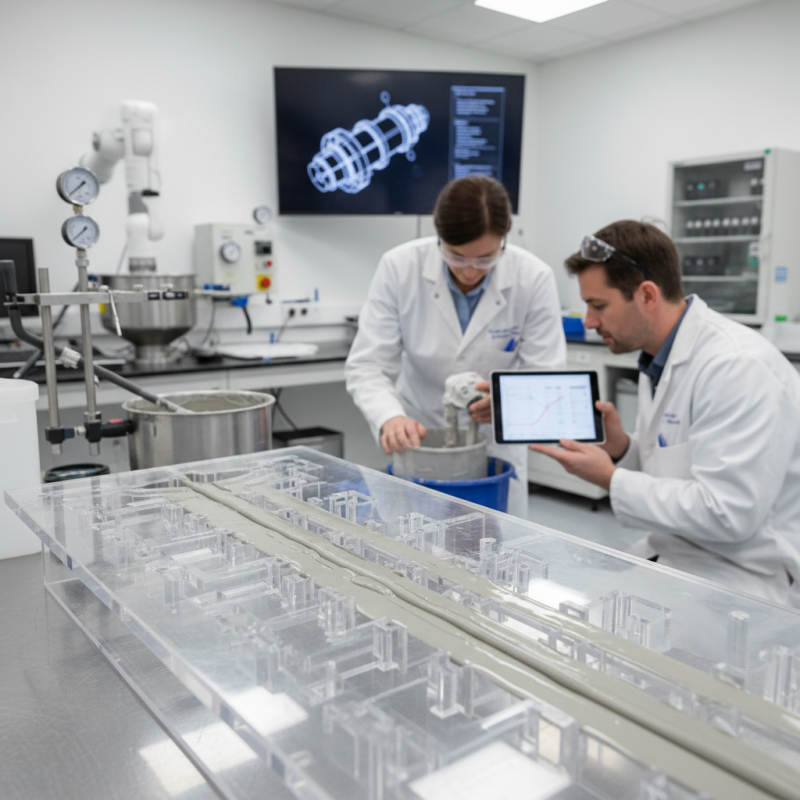
Understanding Grout Flowability and Its Importance in Precision Installation
Grout flowability refers to how easily grout can flow and fill gaps or spaces. This property is crucial for precision equipment installation. High flowability means better penetration into small voids, ensuring a strong bond and even distribution. This, in turn, leads to enhanced stability and performance of the installed equipment.
To improve grout flowability, consider adjusting the water-to-cement ratio. Too much water can weaken the grout. Use additives like superplasticizers to enhance workability without compromising strength. Additionally, the size of the aggregate can influence flowability, so selecting the right materials is essential. These adjustments require careful balancing; a mistake could lead to unexpected results.
While aiming for optimal flowability, it's important to think critically about your mixtures. Testing different combinations in small batches can help identify the ideal formula for your specific needs. Documenting these trials will provide valuable insights. Despite thorough planning, challenges often arise during installation. Reflecting on these hurdles can uncover new approaches, leading to continuous improvement in your techniques.
Key Factors Influencing Grout Flowability: Composition and Additives
Grout flowability is critical for precision equipment installation. Many factors influence it, especially composition and additives. A study by the American Concrete Institute reveals that a grout's fluidity directly affects its bonding capabilities and overall performance. Enhancing flowability requires careful attention to the mix design.
Composition plays a vital role. The ratio of cement, water, and aggregates must be optimized. Too much water can weaken the grout, while insufficient water can lead to poor flow. Traditional mixes often fail to meet modern standards. Recent reports indicate that adding superplasticizers can increase flowability by up to 30%. These additives improve the grout's workability without compromising strength.
In addition to superplasticizers, the use of fine particles, like silica fume, can significantly impact flowability. These materials fill voids and enhance smoothness. However, relying solely on these additives may result in other issues, such as increased shrinkage. A balanced approach is essential. Each project demands tailored adjustments for optimal outcomes. Testing is crucial to ensure that the grout formulation meets specific project needs. This process can uncover unexpected limitations in flow, necessitating reevaluation of mixture proportions.
Techniques to Enhance Grout Flowability: Mixing Methods and Equipment
Grout flowability is crucial for precision equipment installation. Achieving optimal flow helps ensure even coverage and prevents air pockets. Mixing methods play a vital role in enhancing grout performance. A well-balanced mix produces the right consistency, allowing for better flow.
Utilizing different mixing equipment can significantly influence grout spreadability. High-shear mixers offer uniform blending, reducing clumps. However, operators must monitor mixing times carefully. Over-mixing can lead to excessive air incorporation, negatively affecting flow.
Experimenting with additives can also improve flowability. Adjusting the water-to-cement ratio changes the texture. Finding the right balance may require several attempts. It's important to document each mix to track what works best. Reflecting on these outcomes helps refine methods for future tasks.
Evaluating Grout Performance: Testing Flowability for Optimal Results
Grout flowability is crucial for precision equipment installation. Proper flowability ensures that grout fills voids and adheres well, enhancing stability. Recent research highlights that optimal flowability should be between 110 to 130 seconds when tested using the flow cone method. Grouts with inadequate flowability may lead to voids, affecting equipment alignment and function.
Testing grout performance is a structured process. It involves several parameters such as viscosity, setting time, and workability. A study conducted by leading industry professionals indicated that 65% of grout failures stem from poor flowability. This highlights the necessity for thorough evaluation.
Practitioners must also consider environmental factors. Temperature and humidity can significantly impact grout performance. For instance, high temperatures decrease the working time of grout, leading to potential application issues. Regular testing and adjustments based on conditions can mitigate problems. Evaluating flowability is not merely a procedural step; it’s a critical factor for optimal results in precision installations.
How to Improve Grout Flowability for Precision Equipment Installation? - Evaluating Grout Performance: Testing Flowability for Optimal Results
| Test Parameter |
Measurement Unit |
Sample 1 |
Sample 2 |
Sample 3 |
| Flowability (Time) |
seconds |
40 |
35 |
38 |
| Viscosity |
Pa·s |
1.2 |
1.1 |
1.3 |
| Density |
g/cm³ |
2.0 |
1.9 |
2.1 |
| Setting Time |
minutes |
60 |
65 |
62 |
| Compressive Strength |
MPa |
30 |
28 |
32 |
Industry Standards and Guidelines for Grout Application in Precision Equipment
Proper grout application is essential for ensuring the stability and precision of equipment installations. Industry guidelines emphasize specific flowability standards to achieve optimal performance. According to the American Concrete Institute (ACI), ideal grout should have a fluid consistency while maintaining enough viscosity to support load-bearing capabilities. ACI recommends a flowable grout with a water-to-cement ratio of approximately 0.40 to 0.45 for enhanced workability.
Grout flowability can impact alignment significantly. When grout is too thick, it may not reach all areas of the equipment base, leading to imprecise support. Conversely, overly fluid grout can lead to a loss of shape and strength. Research by the International Grout Association reveals that achieving a consistent flowability can reduce installation errors by up to 30%. Regular monitoring of grout properties according to ASTM C938 will improve adherence to standards and enhance equipment longevity.
However, achieving the right balance in grout consistency can be challenging. Professionals must conduct field tests before installation to assess the grout's performance. Unexpected variables, such as ambient temperature and humidity, can affect grout hydration. This variability can lead to inconsistency in grout strength. Attention to these details is crucial to ensure equipment remains within operational tolerances, reflecting a commitment to excellence in precision equipment installation.
Conclusion
Improving the flowability of grouts for precision equipment installation is crucial to ensure a solid and stable foundation for various applications. Understanding grout flowability involves recognizing its significance in achieving precise alignment and support for machinery. Key factors influencing this property include the grout's composition and the additives used, which can significantly alter its viscosity and ease of application.
To enhance grout flowability, various mixing methods and equipment can be employed to optimize the blending of materials. Evaluating grout performance through specific testing can ensure that the flowability meets the desired standards for optimal results. Adhering to industry standards and guidelines further guarantees effective and reliable grout application, ultimately leading to improved performance in precision equipment installations.

 Shengchuang Building