High-performance chemicals and functional compounds engineered directly from national high-tech manufacturing centers for global supply chains.
Modern concrete fabrication has evolved from basic mechanical shaping into a highly sophisticated domain of chemical-mechanical synergy. Today, the term "fabrication tools" encompasses not only traditional cutting, drilling, and finishing machinery but also the advanced chemical systems and admixtures that dynamically modify cementitious matrices. Without these chemical tools, executing complex structural designs in tunnels, marine bridges, high-traffic industrial plants, and skyscrapers would be structurally impossible.
Industrial development demands structures with greater spans, thinner components, and superior resistance to cyclic dynamic loading and chemical ingress. SINO-SINA (Shengchuang Concrete) has been at the forefront of this architectural and structural transition, developing advanced solutions that act as the chemical gears within the concrete formulation machine. In this whitepaper, we dissect the top ten technologies that represent the state-of-the-art in concrete material modification and structural reinforcement, highlighting how direct-factory manufacturing creates a secure supply loop for global engineering enterprises.
"Advanced chemical admixtures are no longer just optional modifiers; they are the core structural tools that define the workability, strength transition, and lifetime endurance of modern civil engineering structures."
Color stability, solar reflectance, and self-cleaning attributes are vital for architectural and environmental concrete surfaces. Factory Direct Titanium Dioxide ($TiO_2$) serves as an essential raw material. When blended into exterior coatings or the concrete mix design, it yields high-opacity white finishes and triggers photocatalytic reactions that degrade organic pollutants and Nitrogen Oxides ($NO_x$) under UV radiation. This keeps structural concrete facades aesthetically clean and reduces urban heat island effects.
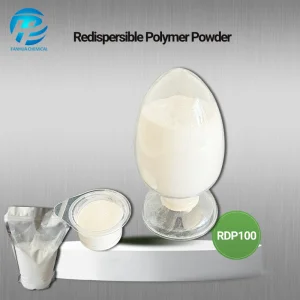
RDP stands as a revolutionary dry-mix modifier. In repair mortars and structural grouts, it forms a flexible polymer film within the cement hydration voids. This secondary polymeric network enhances adhesion to historic concrete substrates, significantly increases flexural strength, and controls micro-crack propagation under thermal stress cycles.
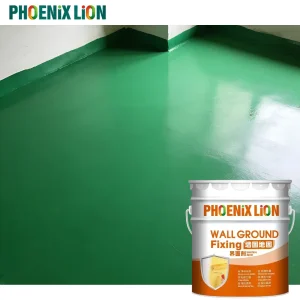
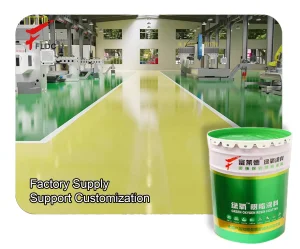
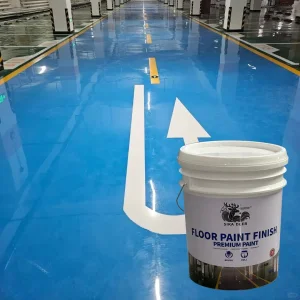
Epoxy coatings like the Fldc F1003 Two-Pack System provide impenetrable chemical barriers. For factory flooring and chemical storage areas, these coatings prevent corrosive agents (acids, salts, oils) from reaching structural concrete, preventing chemical-induced spalling and steel rebar carbonation.
High-strength, non-shrink grouting compounds are critical for heavy machinery foundations and precast panel shear keys. They use precise expansion agents to offset the natural drying shrinkage of Portland cement, ensuring a continuous load-transfer interface that prevents micro-gaps and stress concentrations.
For high-load pavements and bridge decks, composite additives (such as anti-rutting and asphalt mix modifiers) act as structural fibers and viscoelastic dampers. These additives resist plastic deformation under wheel loads at high temperatures while mitigating cracking under sub-zero thermal stresses.
The Sfc-Ae01 liquid and moisture-protected powdered air entrainers introduce stable micro-bubbles with highly controlled spacing factors. These bubbles provide expansion relief chambers for freezing water, preventing the micro-hydraulic fracturing of the concrete matrix during freeze-thaw cycles.
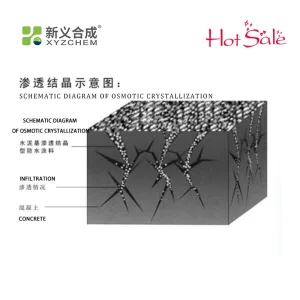
Utilizing active silica and chemical catalysts, crystalline masterbatches penetrate deep into the concrete's capillaries. In the presence of moisture, they react with unhydrated cement compounds to grow insoluble dendrite-like crystals. These crystals block water pathways and seal micro-cracks up to 0.4mm, providing deep, self-healing waterproofing.
PCEs represent the peak of high-range water reducers. By applying steric hindrance alongside electrostatic repulsion, they disperse cement grains with water reduction rates exceeding 30%. This enables the casting of self-consolidating, ultra-high-strength concrete (UHPC) without sacrificing flowability.
In cold-weather casting or fast-track structural repair, chemical accelerators (such as the Phoenix Lion Early Strength Agent) hasten the hydration of tricalcium silicate ($C_3S$). This allows structures to reach design strength in a fraction of the standard time, shortening construction timelines.
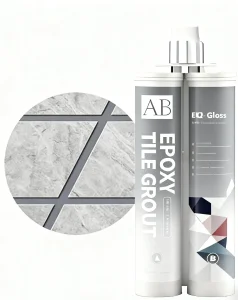
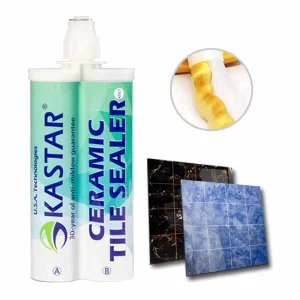
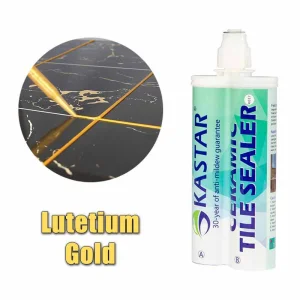
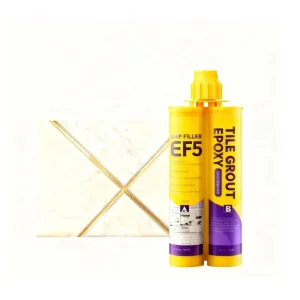
Finishing systems require dynamic bonding strength. Modern tile grouting formulations combine hydrophobic agents with acrylic or epoxy matrices, preventing water ingress at joint interfaces and securing structural tiling under dynamic loading.
| Chemical Tool Type | Primary Mechanism | Target Engineering Parameter | Compliance Standard |
|---|---|---|---|
| RDP (Polymer Powder) | Flexible polymeric film formation | Flexural & Adhesion Strength | EN 12004 / ASTM C1583 |
| Titanium Dioxide ($TiO_2$) | Photocatalytic oxidation & opacity | Solar Reflectance & Self-Cleaning | ASTM D476 |
| Epoxy Flooring Coating | Cross-linked thermosetting barrier | Chemical & Wear Resistance | ASTM D4060 / EN 13813 |
| Crystalline Masterbatch | Catalytic micro-crystal precipitation | Self-Healing / Permeability Red. | ACI 212.3R-10 / EN 12390 |
| PCE Superplasticizer | Steric hindrance dispersion | High Flow / Low W/C Ratio | ASTM C494 Type F / EN 934-2 |
Industrial concrete construction operates on tight schedules and relies on stable, high-volume chemical supply lines. As chemical formulas become more complex, sourcing directly from factories is crucial to verify material traceability, verify purity, and maintain competitive pricing. Direct-factory production ensures consistent raw material sourcing, which is vital because slight deviations in chemical purity can significantly alter concrete setting times, slump retention, and structural performance.
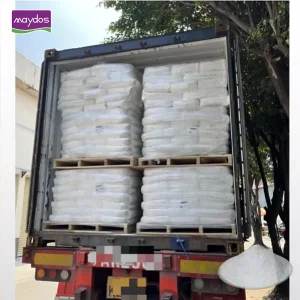
Moreover, global supply chains must navigate strict shipping regulations, particularly for liquid chemical admixtures and fine powders. The packaging of these materials, such as moisture-protected multi-wall bags for powders and sealed intermediate bulk containers (IBCs) for liquid superplasticizers, is designed to prevent hydration during long ocean transit. Direct-factory sourcing simplifies compliance paperwork, giving engineering procurement teams direct access to Safety Data Sheets (SDS), Certificates of Analysis (CoA), and import-export customs documentation.
Established in 2008, SINO-SINA (Shengchuang Concrete) is a national high-tech enterprise specializing in concrete structure construction, repair, bonding, reinforcement, and protective systems. The company holds numerous patents covering bridges, tunnels, structural reinforcement systems, and concrete restoration technologies. A core innovation within their product line is Ultra-High Performance Concrete (UHPC) cladding systems, which represent a major advancement in architectural concrete.
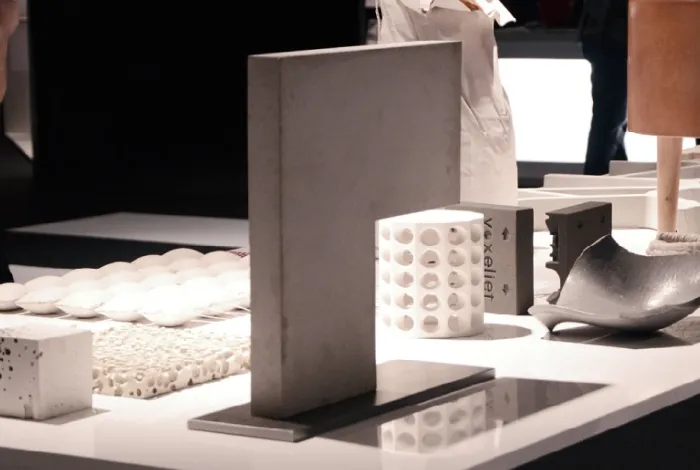
Ultra-High Performance Concrete (UHPC) panels represent a significant advancement in architectural cladding. Engineered with a dense, optimized particulate mix, silica fume, and high-tensile fibers, UHPC panels exhibit exceptional compressive strength (exceeding 120 MPa) and high flexural capacity. Unlike traditional precast panels, UHPC panels feature negligible capillary porosity. This prevents water penetration, carbonation, and freeze-thaw damage, making them ideal for high-exposure building envelopes and structural facades.
By blending advanced polycarboxylate ether chemistry with ultra-fine mineral structures, Shengchuang Concrete produces UHPC panels that are thinner, lighter, and more durable than traditional precast alternatives. This allows architects to design complex, large-format facades without adding excessive dead load to the building structure.
High-performance chemical systems are customized to perform in specific regional environments and meet various engineering demands. On bridge decks, where structures face continuous dynamic loading and deicing salts, SINO-SINA’s anti-rutting and asphalt additives work in tandem with penetrating crystalline waterproofing agents to prevent moisture and chloride ions from reaching structural steel reinforcement.
In tunnel construction, where concrete must set rapidly in damp, high-humidity environments, using the proper concrete accelerators and early strength agents is vital. High-early-strength shotcrete allows for rapid ground stabilization, protecting tunnel excavation faces from collapse. On the factory floor, epoxy resins and quick-curing repair grouts create seamless, impact-resistant industrial surfaces that handle heavy forklift and automated guided vehicle (AGV) traffic.

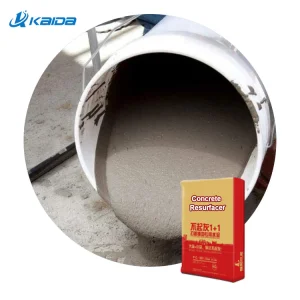
Infrastructure rehabilitation projects require specialized materials that form strong, long-lasting bonds with existing concrete. Since 2008, Shengchuang Concrete has developed targeted solutions to restore and reinforce aging bridges, high-traffic highway structures, and tunnels. These solutions include high-strength, non-shrink grouting compounds and epoxy-based concrete resurfacers designed for fast strength development, which minimizes traffic disruption.
Additionally, their polymer-modified mortar and bonding agents are formulated to match the thermal expansion characteristics of older concrete, ensuring repair patches do not crack, delaminate, or spall under seasonal temperature changes.
The concrete fabrication industry is shifting toward digitalization and low-carbon materials. Developing sustainable cement chemistry is a key priority, driven by the global goal to reduce the carbon footprint of cement production. Future concrete admixtures will play a key role in enabling the use of high-volume supplementary cementitious materials (SCMs), such as calcined clays and slag, without compromising early-age strength development.
At the same time, the integration of AI-driven formulation engines is changing how factories optimize concrete mix designs. By analyzing raw material chemistry, aggregate grading, and ambient temperature data in real time, automated dosing systems can adjust admixture levels dynamically, reducing material waste and ensuring consistent concrete properties on site.
Professional engineering responses to high-intent questions regarding structural concrete repair, modifiers, and application methods.
Redispersible Polymer Powder (RDP) contains spray-dried polymer emulsions. When blended with water during mortar preparation, these particles re-disperse into a polymeric emulsion. As cement hydrates, this emulsion coalesces into a continuous, flexible polymer film that fills the capillary pores and coats the hydration crystals. This film is highly elastic and bridges micro-cracks under load, improving the mortar's tensile strength, flexural resilience, and bonding strength to the substrate.
Two-pack epoxy coatings rely on a chemical reaction between an epoxy resin and an amine hardener to form a cross-linked thermosetting polymer layer. This creates a dense, impact-resistant protective barrier that seals concrete against chemicals, water, and heavy traffic. In contrast, conventional concrete sealers are often single-component acrylics or silanes that form a thin surface film or penetrate capillaries without creating a chemical-resistant layer, offering less protection in heavy-duty industrial environments.
When water inside concrete freezes, it expands by approximately 9%, creating high hydraulic pressure within the capillary pores. Air-entraining agents generate microscopic bubbles that must be spaced closely (typically under 200 micrometers apart) to act as relief reservoirs. If the spacing factor is too wide, water cannot travel quickly enough to reach the bubbles, leading to internal micro-cracking, surface scaling, and eventual structural failure.
Penetrating crystalline admixtures contain hydrophilic chemical compounds. When water enters concrete cracks, these compounds dissolve and react with unhydrated cement particles and calcium hydroxide. This reaction forms insoluble, needle-like calcium silicate hydrate (C-S-H) crystals that grow throughout the crack, sealing it against further moisture ingress. If dry conditions return, the reaction stops, but it reactivates immediately if moisture returns.
High-purity chemical additives, modifiers, and superplasticizers designed to enhance concrete workability, durability, and mechanical properties.
 Shengchuang Building