Concrete is a crucial material in construction, especially in harsh environments. Its performance can significantly affect infrastructure longevity. According to the American Concrete Institute, approximately 70% of infrastructure failures happen due to inadequate concrete durability. To ensure long-term durability of concrete in harsh environmental conditions, careful consideration of materials and design is essential.
Dr. Martin Oliver, a leading expert in concrete technology, emphasizes, "Proper mix design and additive use are vital to resilience.” His insights highlight the science behind reinforcing concrete against challenges like freeze-thaw cycles and chemical attacks. Despite advancements, many projects still face issues like cracking and spalling, which raises the need for ongoing evaluation and innovation in concrete practices.
It is crucial to recognize that achieving optimal durability is not a one-time process. Regular maintenance and timely repairs often get overlooked. Engineers must balance cost and durability while selecting the right materials. This approach ensures that structures can withstand the test of time, even under demanding conditions.
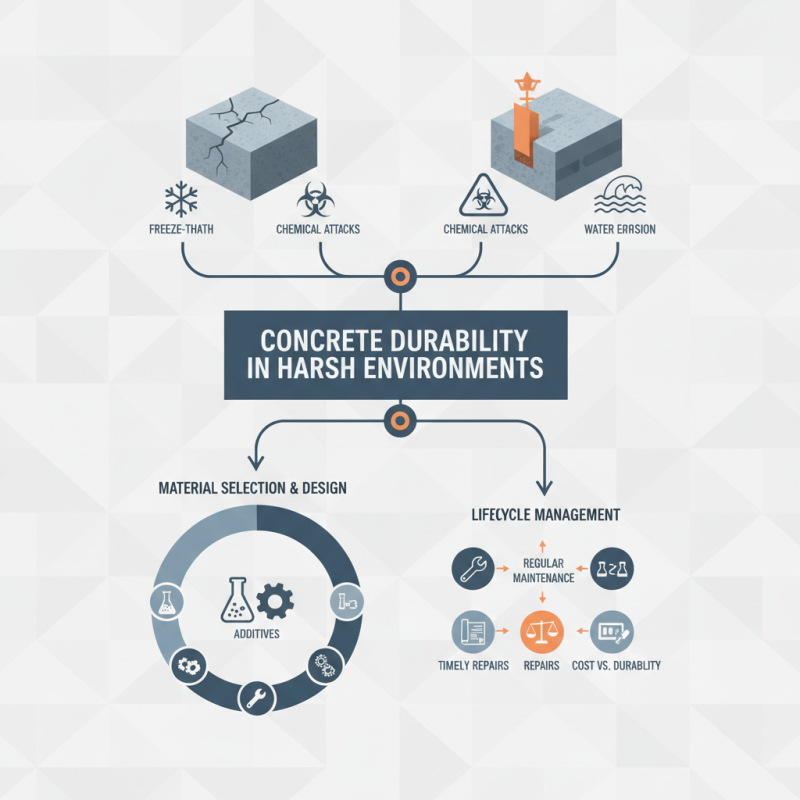
Concrete durability in harsh environments is crucial for maintaining the longevity of structures. Studies indicate that about 70% of concrete deterioration results from environmental factors. These include extreme temperatures, freeze-thaw cycles, and exposure to aggressive chemicals. In coastal areas, chloride ions from seawater significantly accelerate corrosion in steel reinforcement. This deterioration can lead to costly repairs and dangerous structural failures.
A report from the American Concrete Institute highlights that concrete exposed to de-icing salts can lose half of its strength in as little as five years. Proper mix design and construction methods play a vital role. Incorporating supplementary cementitious materials, like fly ash or slag, can enhance resistance to these aggressive conditions. However, it’s essential to recognize that even the best practices may not fully prevent damage in extreme situations.
Moisture control is equally important. Water ingress can exacerbate freeze-thaw damage and chemical attacks. Effective sealing methods can mitigate this risk, but imperfections in application can lead to vulnerabilities. Continuous monitoring and assessment of concrete structures are necessary to address emerging issues promptly. Adopting a proactive approach will help ensure that structures perform well, even in the face of harsh environmental challenges.
Concrete durability in harsh environments is critical for long-lasting structures. Several key factors impact how concrete performs in aggressive conditions. One of these factors is the water-to-cement ratio. A lower ratio often leads to stronger concrete but requires careful handling to prevent workability issues during mixing.
Another crucial factor is the type of aggregates used. Some aggregates can react adversely with the alkalies in cement. This can lead to expansion and cracking over time. Ensuring that high-quality aggregates are selected is fundamental. Poor choices here can undermine a structure's integrity.
Additionally, environmental influences play a significant role. Exposure to chlorides, sulfates, and other aggressive agents can degrade concrete. Implementing protective measures, like surface treatments or sealers, can help. Yet, these solutions are not foolproof. They may need regular maintenance to be effective. Reflecting on these variables is essential for achieving true durability.
Mixing and curing concrete properly is essential for durability, especially in harsh environments. Industry reports indicate that improper mixing can reduce compressive strength by up to 30%. The right water-cement ratio is crucial. A typical ratio is 0.45, providing a balance between workability and strength. However, varying environmental conditions may require adjustments. Use of additives can also enhance the performance of concrete, making it more resistant to freeze-thaw cycles.
Curing is equally important. Studies show that proper curing can increase concrete strength by up to 50%. Maintaining moisture during the curing process prevents cracks and ensures a solid bond. Applying curing compounds or covering the surface with wet burlap are effective methods. These techniques help retain moisture, especially in dry climates. Despite best efforts, issues may still arise. Inconsistent curing times or inadequate mixing are common oversights.
Monitoring the concrete as it sets is crucial. Visual inspections can reveal issues like surface cracks or discoloration. These signs indicate potential problems that should be addressed immediately. Keeping detailed records of mixing and curing can identify patterns and help refine processes. This proactive approach to quality control ensures longevity even in demanding conditions.
Concrete durability in harsh environments is critical for infrastructure longevity. Advanced materials and technologies significantly enhance this durability. Recent studies show that using silica fume can increase strength by up to 30%. This additive fills microvoids, leading to a denser and more resilient concrete matrix. High-performance concrete (HPC) showcases reduced permeability, making it suitable for extreme weather conditions.
Another effective technology is the incorporation of hybrid fibers. Research indicates that fiber-reinforced concrete exhibits improved toughness and crack resistance. Adding synthetic fibers can minimize shrinkage cracking. This innovation is particularly beneficial in freeze-thaw cycles, where traditional concrete often fails. However, attention to mixing techniques is vital, as improper ratios can exacerbate issues like segregation.
Tips: Ensure uniform mixing of materials for optimal strength. Regular testing of concrete samples can reveal weaknesses before large-scale applications. Monitor environmental conditions during setting and curing; factors like temperature and humidity can significantly impact performance. Using advanced monitoring tools can help assess the durability of structures over time. Industrial experts recommend periodic evaluations to adapt techniques as necessary.
Concrete structures in harsh environments face unique challenges. Regular maintenance and monitoring are essential to ensure their durability. Over time, exposure to extreme temperatures, moisture, and chemicals can weaken concrete. Thus, establishing a routine inspection process is vital for identifying issues before they escalate.
Implementing a strict maintenance schedule can significantly enhance concrete life span. Check for cracks and surface spalling regularly. Use specialized tools to detect underlying issues. Address problems early to prevent larger repairs later. Regular cleaning can also help in reducing the impact of environmental factors.
**Tips**:
1. Look for signs of wear, such as discoloration or flaking.
2. Seal surfaces to protect against moisture intrusion.
3. Keep a log of inspections and findings for future reference.
Monitoring tools, such as sensors, can provide real-time data. This technology helps in assessing the condition of concrete structures continuously. However, such systems may require significant investment and training. Each project’s specific needs can affect their effectiveness. Balancing cost with long-term benefits is crucial in decision-making. Regularly updating maintenance practices ensures they remain relevant and effective.
: Environmental factors cause about 70% of concrete deterioration. Extreme temperatures and freeze-thaw cycles are key contributors.
Moisture can worsen freeze-thaw damage. Effective sealing methods can help prevent water ingress and chemical attacks.
A lower water-to-cement ratio usually leads to stronger concrete. However, care is needed during mixing for workability.
The type of aggregates can affect concrete integrity. Inferior aggregates may react with alkalies, causing expansion and cracking.
Incorporating additives and supplementary materials, like fly ash, enhances concrete’s resistance. Proper mix design is essential.
Inconsistent curing times and inadequate mixing are frequent oversights. These can result in reduced strength and cracks.
Visual inspections can help identify issues early. Keeping detailed records of mixing and curing aids in recognizing patterns.
Applying curing compounds or using wet burlap helps retain moisture. These methods are especially useful in dry climates.
Surface treatments can help protect concrete, but they require maintenance. Regular checks are necessary for effectiveness.
No, even the best practices might not prevent damage. It's important to stay vigilant and address emerging concerns proactively.
Ensuring the long-term durability of concrete in harsh environmental conditions is crucial for the longevity of structures exposed to aggressive elements. This involves understanding the key factors that affect concrete performance, such as temperature fluctuations, moisture ingress, and chemical exposure. Implementing best practices for mixing and curing concrete can significantly enhance its resilience. Additionally, utilizing advanced materials and innovative technologies can further bolster concrete’s durability, making it better suited for demanding environments.
Moreover, regular maintenance and monitoring strategies are essential to proactively address potential issues and prolong the lifespan of concrete structures. By prioritizing these practices, engineers and builders can effectively ensure long-term durability of concrete in harsh environmental conditions, ultimately leading to safer and more sustainable infrastructure.

Shengchuang Building