Concrete structures are essential for modern infrastructure. Yet, they face challenges from environmental factors. As they age, maintenance becomes a significant concern. To address this, industry experts emphasize the importance of additives. Dr. John Smith, a leading specialist in concrete technology, states, "Using protective additives is crucial to extend the service life of concrete structures."
These protective additives can enhance durability. They help resist water ingress, chemical attacks, and freeze-thaw cycles. By incorporating them into concrete mixes, we can significantly improve performance over time. However, selecting the right additive requires careful consideration of concrete’s intended use and exposure conditions.
While the benefits are clear, some projects have faced issues. Cost, application methods, and environmental impacts can complicate usage. It's essential to weigh these factors. Ultimately, to extend the service life of concrete structures with protective additives, proper planning and execution are vital. Investing in the right solutions will pay off in the long run.
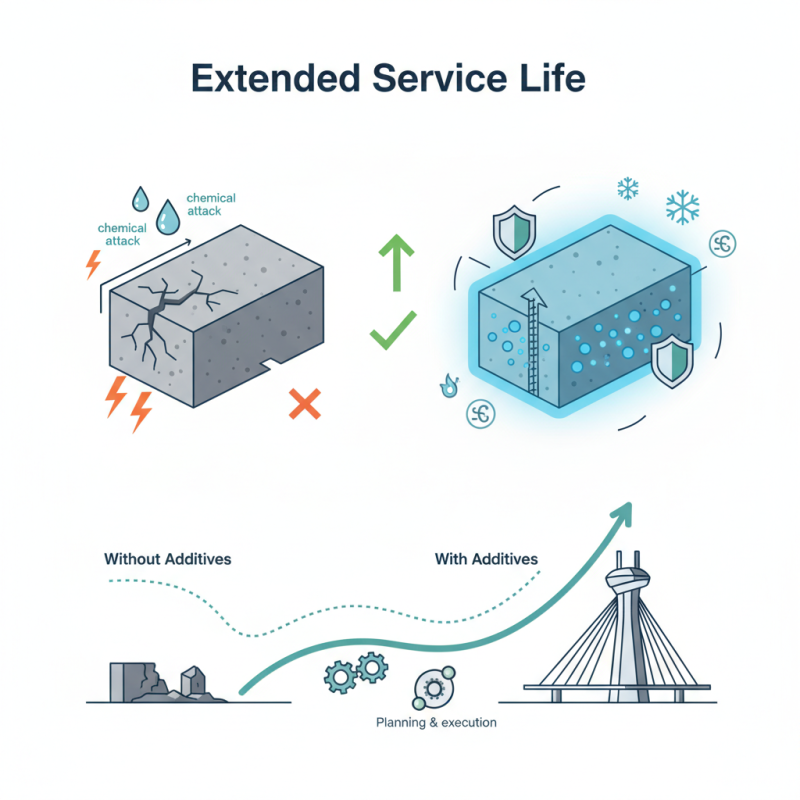
Concrete additives play a crucial role in extending the service life of structures. They enhance properties such as strength, durability, and resistance to environmental factors. According to the American Concrete Institute, well-selected additives can improve concrete‘s lifespan by up to 30%. This is significant when considering the lifespan of concrete, which typically ranges from 50 to 100 years.
A common challenge with concrete is cracking due to shrinkage and temperature changes. Using additives like superplasticizers can reduce water content while maintaining workability. This results in denser concrete, significantly decreasing the chances of cracking. Additives such as polymer-modified compounds also provide better adhesion and flexibility, allowing for movement without failure.
Tip: Always consider the environmental conditions of the project site when selecting additives. Concrete exposed to freeze-thaw cycles benefits from air-entraining agents.
Test data from various studies indicate that using fibers in concrete can reduce crack widths by 50%. This addition improves tensile strength and contributes to overall structural integrity. However, it is essential to balance the types and quantities of additives to avoid unintended side effects, like workability issues.
Tip: Regularly consult with concrete specialists to determine which additives are best suited for your specific application. Keeping up with recent research can significantly enhance the performance and longevity of concrete structures.
| Additive Type | Primary Benefit | Typical Usage | Longevity Effect |
|---|---|---|---|
| Water-Reducing Agents | Increases workability and reduces water content | General concrete mixtures | Improved compressive strength |
| Air-Entraining Agents | Enhances freeze-thaw resistance | Cold climate concrete applications | Reduces cracking and spalling |
| Superplasticizers | Improves fluidity without extra water | High-performance concrete | Longer lifespan and durability |
| Corrosion Inhibitors | Protects reinforcement from corrosion | Structures exposed to chlorides | Extends service life significantly |
| Chemical Admixtures | Enhances various properties | Custom concrete applications | Improves durability and resistance |
: Additives enhance concrete's durability and performance. They modify properties, improving longevity and resistance to environmental factors.
Water-reducing admixtures lower the water-cement ratio. This leads to stronger and denser concrete, increasing load-bearing capacity.
They create microscopic air bubbles in concrete. These bubbles absorb shocks during freeze-thaw cycles, reducing cracking risks.
Yes, they react with calcium hydroxide, enhancing binding properties. This reaction generates durable compounds that improve performance.
Regular inspections can identify early issues. Proactive maintenance can extend the lifespan of concrete structures significantly.
Visual inspections can detect cracks and discoloration. Advanced sensors can monitor stress and moisture levels in real-time.
Timely maintenance can prevent small issues from escalating. Neglecting repairs often leads to significant damage over time.
No, environmental factors also impact concrete integrity. Addressing temperature, moisture, and other conditions is crucial.
Consider the effectiveness and frequency of inspections. Continuous learning helps extend the service life of concrete.
Schedule regular inspections, use modern monitoring tech, and implement timely maintenance strategies to ensure durability.
Concrete structures, crucial to modern infrastructure, can significantly benefit from the incorporation of protective additives aimed at extending their service life. Understanding the importance of these additives is essential, as they enhance durability and mitigate damage caused by environmental factors. Different types of additives serve various purposes, such as improving resistance to water penetration, reducing thermal cracking, and enhancing overall performance through their unique mechanisms of action.
To effectively extend the service life of concrete structures with protective additives, it is vital to employ proper application techniques, ensuring even distribution and optimal interaction with concrete mix components. Furthermore, implementing rigorous monitoring and maintenance strategies will contribute to the longevity of the structure, safeguarding investments and reducing future repair costs. By focusing on these key areas, the durability and functionality of concrete structures can be substantially improved, promoting a sustainable and resilient built environment.

 Shengchuang Building