Engineered for long-distance ready-mix logistics, severe ambient heat, and ultimate durability control.
Equatorial Guinea's construction landscape is undergoing a critical transformation. Major structural projects spanning Malabo's coastal infrastructure, Bata's port expansion, and the ongoing development of the new administrative capital, Ciudad de la Paz (formerly Oyala), are driving unprecedented demand for advanced concrete chemistry. Operating in Equatorial Guinea introduces specific ambient challenges: high relative humidity averaging 80–90% alongside sustained temperatures hovering between 26°C and 32°C year-round.
These harsh tropical conditions trigger accelerated hydration in freshly mixed concrete. This premature hydration results in brief window times for transport, rapid slump loss, and the frequent formation of structural cold joints. Standard concrete mixtures fail to meet the transport windows necessary to move ready-mix concrete from production terminals in maritime ports to inner mainland placement sites. The utilization of high-efficiency concrete retarders is no longer just an additive option—it has become a core operational requirement to maintain concrete workability and ensure long-term structural load capacity.

Understanding how high-purity organic retarding agents optimize the hydration phase of Portland cement.
Sodium Gluconate coordinates with calcium ions ($Ca^{2+}$) on the surface of hydrating cement particles. It creates a temporary protective barrier that retards the early reaction of tricalcium aluminate ($C_3A$) and tricalcium silicate ($C_3S$) with water, delaying the initial setting time.
Under tropical Central African temperatures, concrete without retarders loses slump in under 45 minutes. Utilizing 98% pure sodium gluconate extends slump retention to over 180 minutes, enabling long-distance haulage and flexible placing schedules.
By retarding early setting, the cement particles disperse more uniformly. This uniform distribution results in a highly compact micro-crystalline matrix, boosting the ultimate 28-day compressive strength by 10-15% while reducing structural porosity.

International procurement managers sourcing construction chemicals for Central African projects face complex logistics challenges. Ensuring continuous batching plant operations requires chemical suppliers who offer more than just bulk materials. Critical sourcing factors include ocean freight stability, resistance of packaging to tropical moisture, and strict quality control certifications.
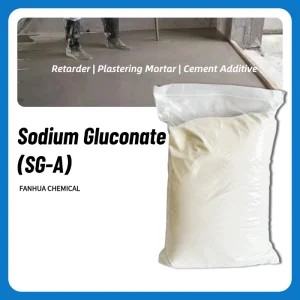
Due to the humid maritime climate of Equatorial Guinea's ports, standard paper packaging is prone to degradation. Our industrial supplies are packed in robust, double-layer PE/PP woven bags designed to withstand high humidity during long-term warehouse storage. We prioritize supply chain reliability, maintaining strategic partnerships with major shipping lines to guarantee consistent delivery schedules to the ports of Malabo and Bata.
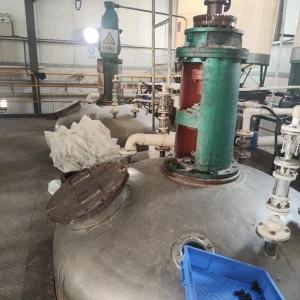
Our production facilities utilize modern Factory 4.0 automation to synthesize high-purity sodium gluconate. By employing computer-controlled bio-fermentation systems, we convert natural corn starch into premium concrete admixtures with minimal waste and high batch-to-batch consistency. The production process integrates continuous chromatography and crystallization to ensure chemical purity remains strictly above 98%.
This automated quality assurance minimizes structural variance when our concrete retarders are integrated with other admixtures in ready-mix concrete plants. In Central Africa, concrete plants frequently blend sodium gluconate with Polycarboxylate Superplasticizers (PCE) to manufacture high-strength, self-consolidating concrete. Our chemical design offers excellent compatibility, preventing unexpected flash setting or excessive air entrainment.
Targeted concrete retarding solutions for the unique civil engineering projects across Malabo, Bata, and Ciudad de la Paz.
Maritime structures in Bata and Malabo are continuously exposed to saltwater and hot coastal climates. Utilizing high-purity sodium gluconate retarding agents delays cement setting times, allowing continuous, monolithic concrete pours that prevent cold joints and help block future chloride ion intrusion.
Transporting ready-mix concrete from coastal plants to inland construction projects in locations like Ciudad de la Paz requires extended workability. Our concrete retarders maintain optimal concrete workability and prevent slump loss for up to three hours under high ambient temperatures.
Mass concrete structures, such as river dams and heavy foundations, generate significant internal heat during hydration. Integrating our setting retarders controls this heat release, minimizing thermal gradient differences and reducing the risk of structural cracking.
Beyond standard concrete retarders, our technical capabilities extend to advanced precast and structural reinforcement systems. We offer a comprehensive range of products including concrete admixtures, specialized mortars/grouts, epoxy resins, concrete repair materials, structural strengthening systems, and innovative construction solutions.
UHPC Cladding Panels: As a leading innovator in cementitious materials, we specialize in Ultra-High Performance Concrete (UHPC) cladding systems. UHPC panels combine extreme compressive strength, high ductility, and low porosity, offering excellent resistance to the tropical maritime climates of Equatorial Guinea. These panels provide designers with a durable, low-maintenance architectural cladding solution for modern commercial facades.
About SINO-SINA: We are a national high-tech enterprise that has been dedicated to the field of special concrete structure construction, bonding, reinforcement, and protection since 2008. We boast numerous patents covering bridge, tunnel, concrete structure reinforcement systems, and concrete repair technologies.
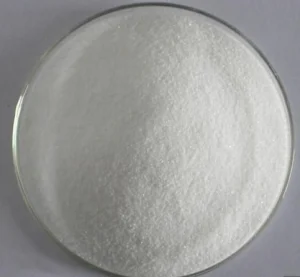
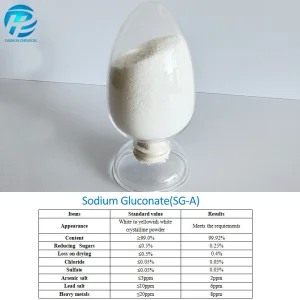
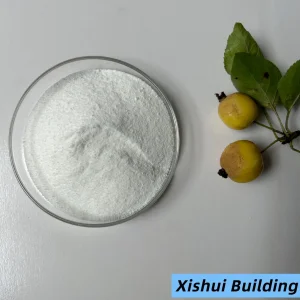
Explore our full line of sodium gluconate products, optimized for high-purity industrial applications.
Expert guidance on storing, dosing, and applying sodium gluconate retarders in tropical regions.
For typical concrete mixtures under normal temperatures, the standard dosage of Sodium Gluconate ranges between 0.03% and 0.1% of the total cementitious material weight. In tropical climates like Equatorial Guinea, where ambient temperatures regularly exceed 30°C, dosages can be optimized up to 0.15% to achieve a setting delay of 2 to 4 hours. Testing is recommended to establish the precise dosage for your project's specific cement chemistry.
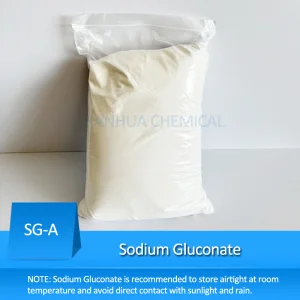
High ambient humidity can cause sodium gluconate powder to absorb moisture and clump. To prevent this, our products are shipped in multi-layer moisture-resistant bags with internal PE linings. Store the material in a cool, dry, and well-ventilated warehouse, keeping pallets elevated off the floor. Keep bags sealed until use to maintain product activity.
Yes. Sodium Gluconate is highly compatible with Polycarboxylate Ether (PCE) superplasticizers. It is commonly used as a retarding component in commercial admixture formulations to control slump loss. Blending these materials helps achieve high water-reduction rates while maintaining the workability of fresh concrete over extended periods.
While retarders extend the initial setting time, they do not reduce ultimate strength. By delaying early hydration, sodium gluconate allows cement particles to disperse and hydrate more uniformly. This uniform hydration creates a dense crystalline structure, which often increases the final 28-day compressive strength compared to standard concrete mixes.
We provide full technical support for local concrete producers. This includes dosage optimization recommendations, compatibility testing with local cement brands, and digital consultations with our application engineers. We also provide complete quality documentation, such as COA, MSDS, and SGS test reports, with every shipment to simplify import customs clearance.
 Shengchuang Building