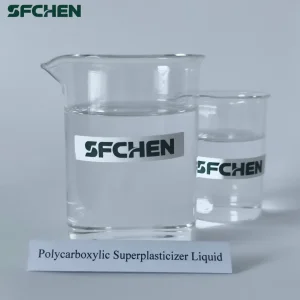
Specially synthesized chemical formulations delivering extreme dispersion, rheology control, and environmental resilience under challenging climatic conditions.
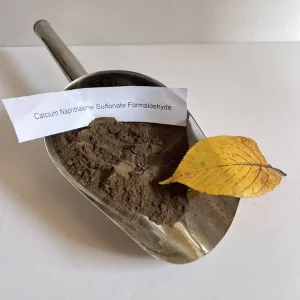
Addressing the complex technical requirements of the Southeastern United States infrastructure corridor and global modern concrete batching standards.
The State of Georgia is undergoing unprecedented infrastructure modernization, ranging from the major expansions at the Port of Savannah to massive highway overhauls under the Georgia Department of Transportation (GDOT). Additionally, heavy commercial developments in Metro Atlanta require high-slump, durable concrete capable of surviving intense summer heat and variable subgrade conditions.
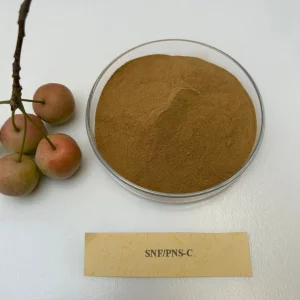
Modern concrete design specs in Georgia demand strict compliance with ASTM C494 Type A (Water-reducing), Type F (High-range water-reducing), and Type G (High-range water-reducing and retarding). Our specialized Polycarboxylate Ether (PCE) and Naphthalene (SNF) formulations are molecularly optimized to exceed these parameters consistently.
Globally, the concrete sector is transitioning toward low-clinker blended cements (Type 1L / Portland-Limestone Cement). Lower cement content requires sophisticated high-range water reducers to achieve required 28-day target compressive strengths while maintaining fluid workability without bleed or segregation.
Understanding how polycarboxylate ethers (PCE) and naphthalene sulfonates (SNF) interact with hydrating cement grains.
Water-reducing concrete admixtures are surface-active chemicals engineered to modify the interparticle forces between cement particles. In traditional Sulfonated Naphthalene Formaldehyde (SNF) and Sulfonated Melamine Formaldehyde (SMF) polymers, dispersion relies primarily on electrostatic repulsion. The negatively charged sulfonate groups ($SO_3^-$) coat the positively charged surface of cement grains, generating electrical double-layer repulsive forces that liberate trapped mix water.
In contrast, Polycarboxylate Ether (PCE) Superplasticizers leverage a dual-action mechanism: electrostatic repulsion combined with powerful steric hindrance. The comb-like molecular architecture of PCE consists of a main acrylic/methacrylic backbone anchored to cement particles, with hydrophilic polyethylene glycol (PEG) side chains extending into the aqueous pore solution. These side chains physically prevent cement grains from agglomerating, granting exceptional slump retention even at extremely low water-to-cement ratios ($w/cm < 0.30$).
| Admixture Chemical Class | Primary Dispersion Mechanism | Water Reduction Capacity | Slump Retention (High Heat) | Ideal Application Scenario |
|---|---|---|---|---|
| PCE Superplasticizer (HPEG/TPEG) | Steric Hindrance + Electrostatic Repulsion | 25% – 40% | 90 – 120+ Minutes | SCC, UHPC, Ready-Mix, High-Rise & Hot Weather Concreting |
| Naphthalene Sulfonate (SNF/FDN) | Electrostatic Repulsion | 15% – 25% | 30 – 60 Minutes | Precast Elements, Pavement Works, High Early Strength Requirements |
| Melamine Sulfonate (SMF) | Electrostatic Repulsion (Zero Color Impact) | 15% – 22% | 30 – 45 Minutes | Architectural White Concrete, Self-Leveling Grouts, Tile Adhesive |
| Calcium Lignosulfonate | Electrostatic Charge Neutralization | 8% – 14% | 45 – 75 Minutes (Retarding) | Mass Concrete Works, Standard Type A Plasticizer Application |
We offer a comprehensive range of products including concrete admixtures, specialized mortars/grouts, epoxy resins, concrete repair materials, structural strengthening systems, and innovative construction solutions tailored for Georgia and export markets.
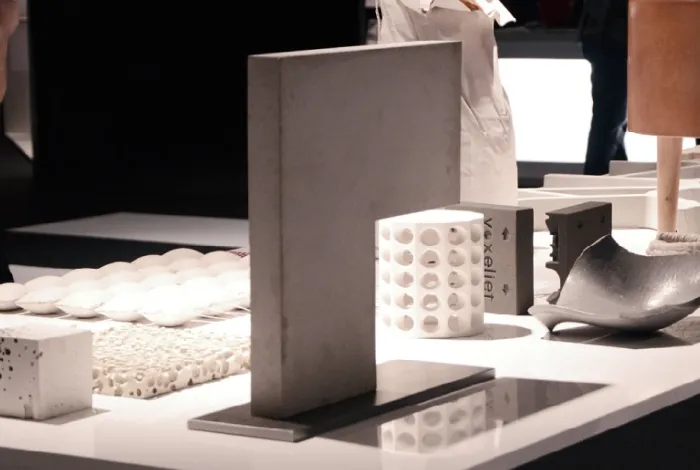
New Generation Concrete Technology: UHPC cladding panels refer to the application of ultra-high performance concrete in precast panels for high-end architectural facade applications. Empowered by our PCE high-range water reducers, UHPC possesses exceptional flexural strength (>20 MPa), extreme compressive density (>150 MPa), and near-zero permeability to combat atmospheric weathering, freeze-thaw cycles, and thermal stresses.
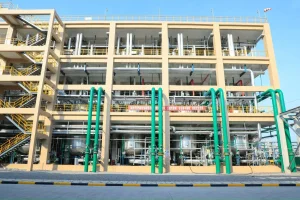
We are a national high-tech enterprise dedicated since 2008 to special concrete structure construction, bonding, reinforcement, and chemical protection. We boast numerous international patents covering bridge, tunnel, concrete structure reinforcement systems, and micro-crack structural concrete repair technologies serving North America, Europe, and Asia-Pacific.
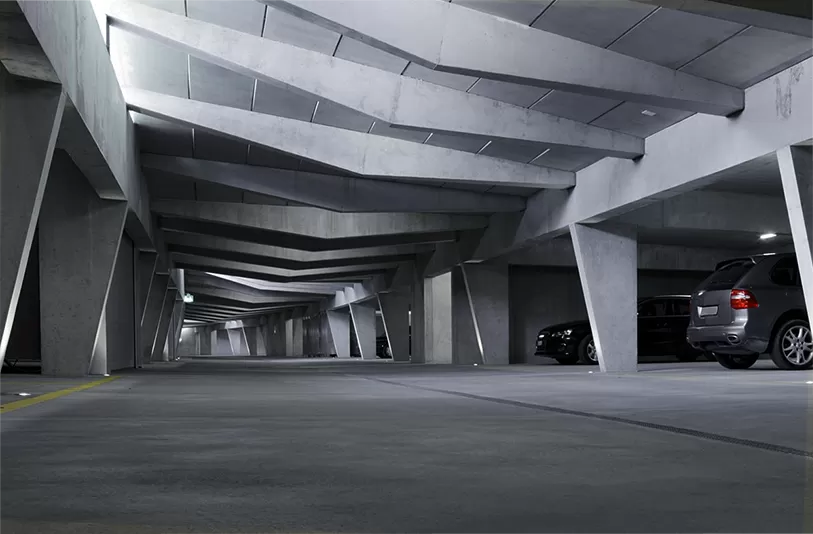
Our chemical admixtures are customized to meet complex engineering demands. Whether supplying liquid PCE bulk tankers to ready-mix plants in Atlanta or shipping 98% solid content PCE flakes and SMF powders to international concrete product manufacturers serving Georgia, our quality control ensures uniform air entrainment, zero batch segregation, and precise setting time control.
Get Georgia Project Field SupportCustom chemical solutions tailored for regional climate conditions, native Piedmont granite aggregates, and state infrastructure guidelines.
Georgia summers frequently reach ambient temperatures exceeding 95°F (35°C), accelerating rapid slump loss and flash setting. Our extended slump retention PCE series maintains high flowability ($>600\text{ mm}$ slump flow) for up to 2 hours without excessive retarding, eliminating cold joints in large deck pours.
Crushed stone crushed from Georgia red clay subgrades and local granite aggregates often contains high clay fractions (kaolinite/smectite) that absorb liquid water and chemical additives. Our clay-tolerant PCE admixtures contain sacrificial molecules that prevent polycarboxylate absorption onto clay layers.
For bridge decks, precast girders, and culverts under GDOT specifications, structural concrete requires strict low chloride-ion diffusion and minimal drying shrinkage. Our high-range water reducers allow slump optimization while reducing $w/cm$ below 0.35, resulting in dense, impervious C-S-H microstructures.
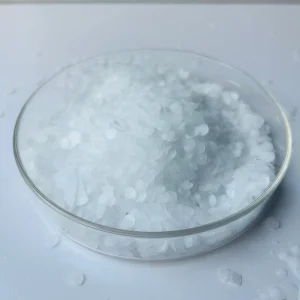
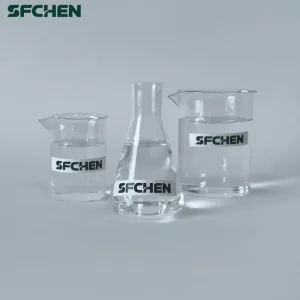
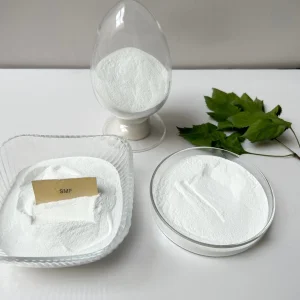
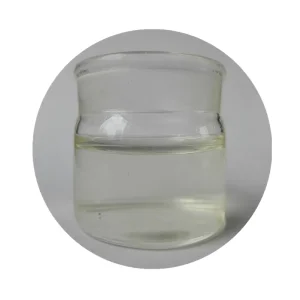
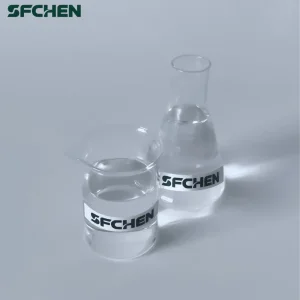
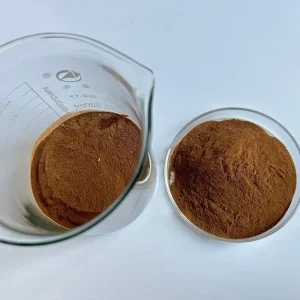
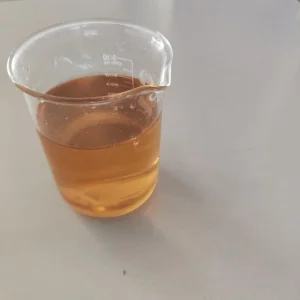
Full spectrum of powder, liquid, and flake water-reducing agents for global shipping and local Georgia distribution.
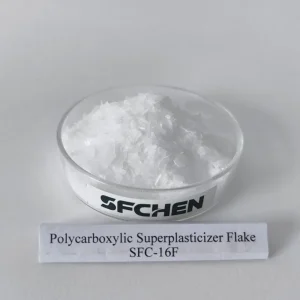
Driving the next generation of sustainable infrastructure chemistry across North American and global construction markets.
Our chemical R&D labs utilize machine learning algorithms to simulate PCE side-chain lengths and polyether densities against specific cement mineral compositions ($C_3S$, $C_3A$ content). This yields custom-tailored dosages optimized for regional ready-mix concrete plants in Georgia.
To assist global contractors in achieving LEED v4.1 and Net-Zero carbon goals, we are pioneering bio-based polycarboxylate architectures derived from renewable agricultural feedstocks, lowering the embodied carbon of chemical admixtures by up to 45%.
As the construction industry transitions from Traditional Type I/II Portland cement to Portland-Limestone Cement (PLC), our next-gen water reducers offset early compressive strength losses while maintaining supreme workability under high limestone powder replacement levels.
Expert insights on product specification, ASTM compliance, dosage optimization, and export shipping dynamics.
Our extended slump retention PCE series (such as SFC-16L and SFC-12L) is engineered with extended side-chain density that slowly releases dispersing polymers as cement hydration progresses. This counteracts rapid slump loss caused by high ambient temperatures (>95°F / 35°C) without delaying initial set time or slowing down concrete strength gain schedules.
Yes. Our complete line of high-range water reducers (HRWR) and plasticizers are certified under ASTM C494 Type A, Type F, and Type G standards. They undergo rigorous third-party laboratory testing to ensure zero chloride content, ideal air content entrainment, and consistent 3-day, 7-day, and 28-day compressive strength enhancements.
We provide flexible global packaging options tailored for batching plants and distributors: Liquid PCE is supplied in 1,000 Liter IBC Totes, 220 Liter HDPE Drums, or 24,000 Liter Flexitanks for maximum bulk cost-efficiency. Solid PCE powder/flakes and SMF powders are packed in 25kg moisture-proof kraft bags or 650kg super sacks.
For standard ready-mix concrete, the typical dosage ranges from 0.4% to 1.2% by weight of total cementitious material ($cwt$). For Self-Consolidating Concrete (SCC) or Ultra-High Performance Concrete (UHPC), dosages can range from 1.0% to 2.5%. We recommend conducting local trail batches with local aggregates and cements to establish optimal performance points.
Request technical data sheets (TDS), safety data sheets (SDS), free lab testing samples, or competitive direct factory quotes for your Georgia infrastructure and batching operations today.
Send Inquiry Now Shengchuang Building