Basic Information
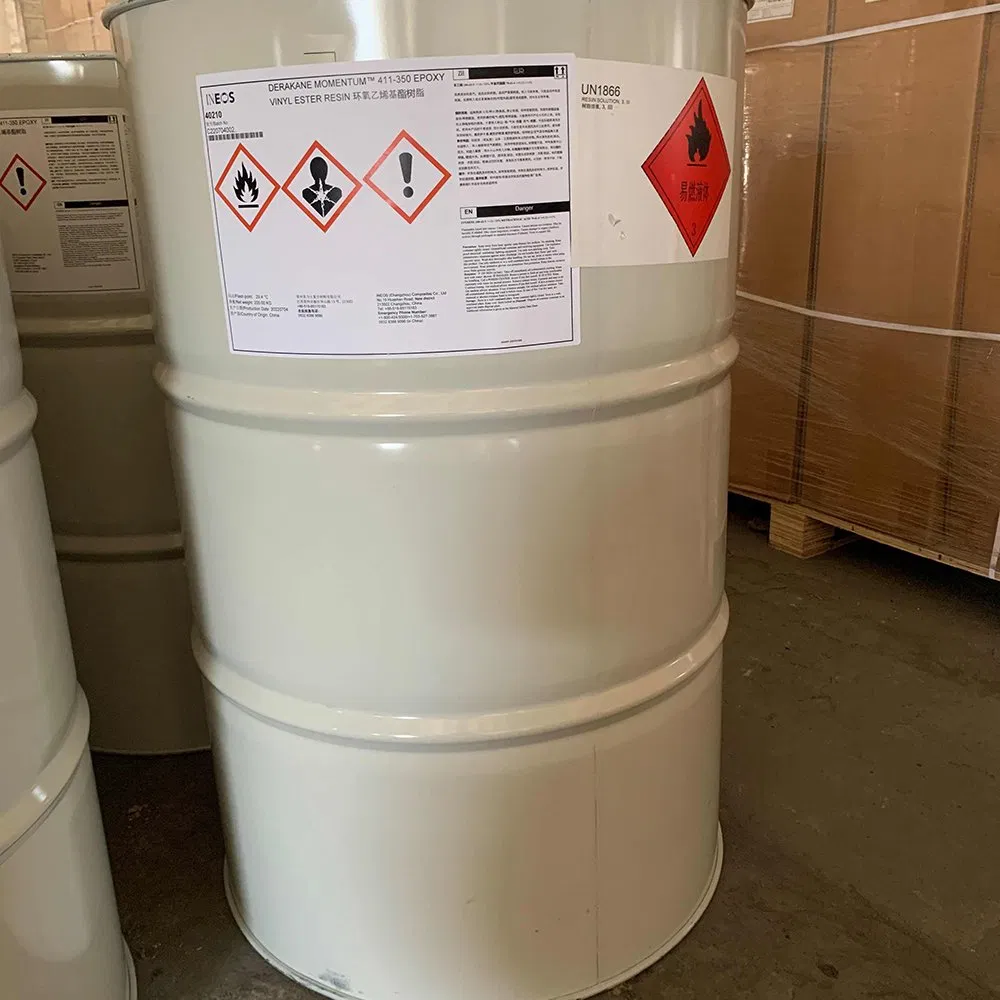
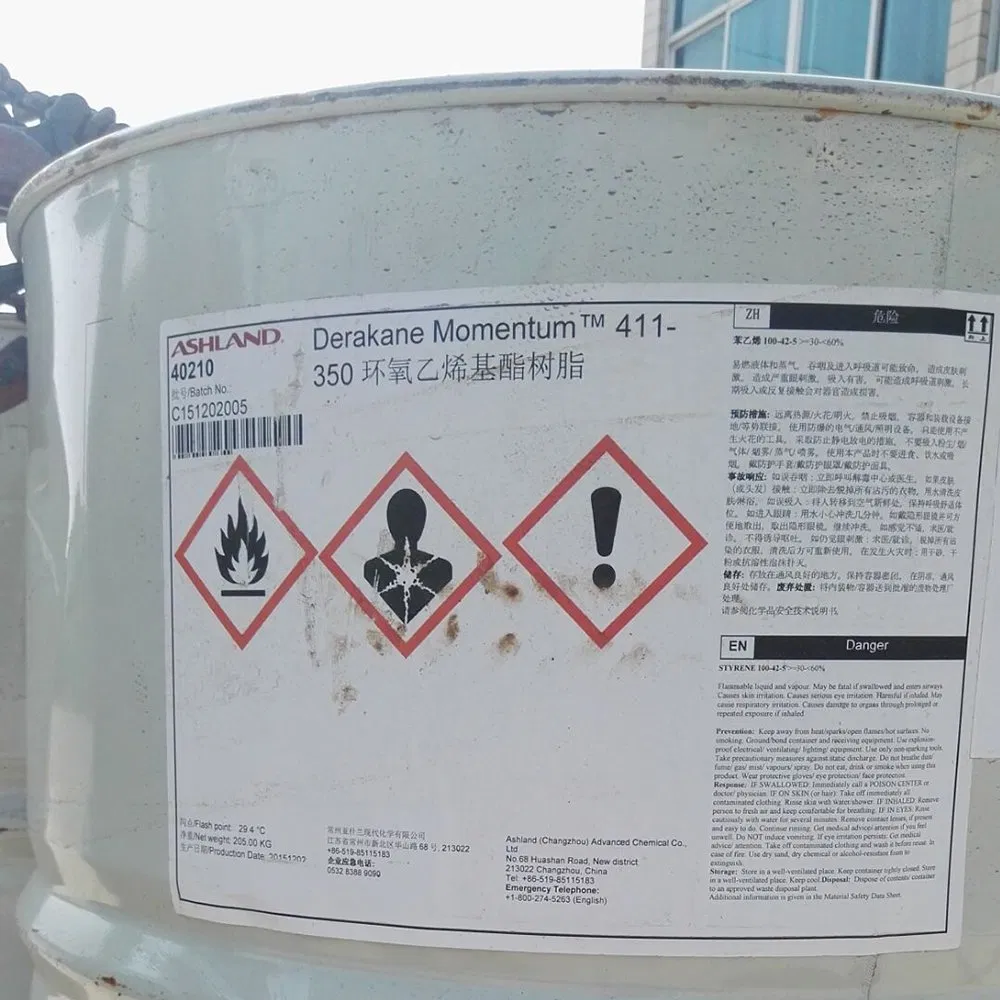
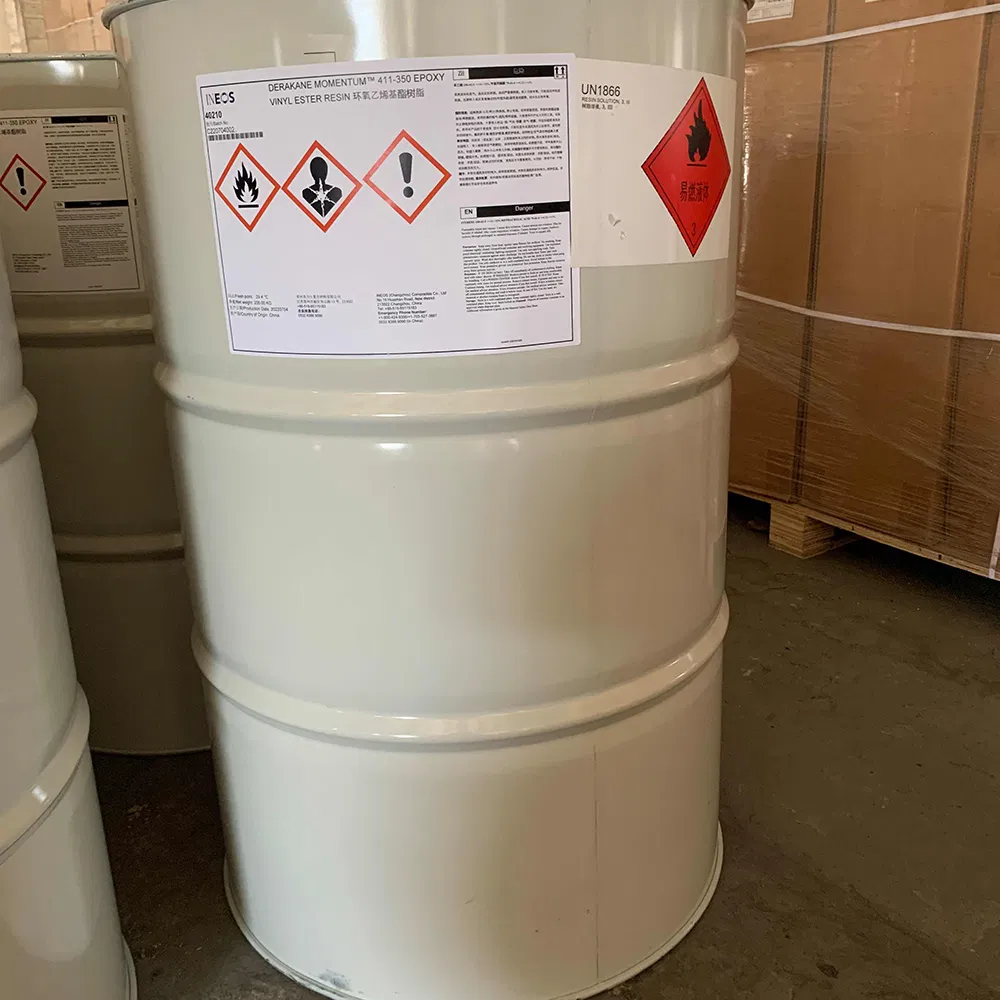
Flammability:
Static Accumulating Liquid
Vapour Density:
> 1(Air = 1.0)
Product Description
Industry Standard Performance
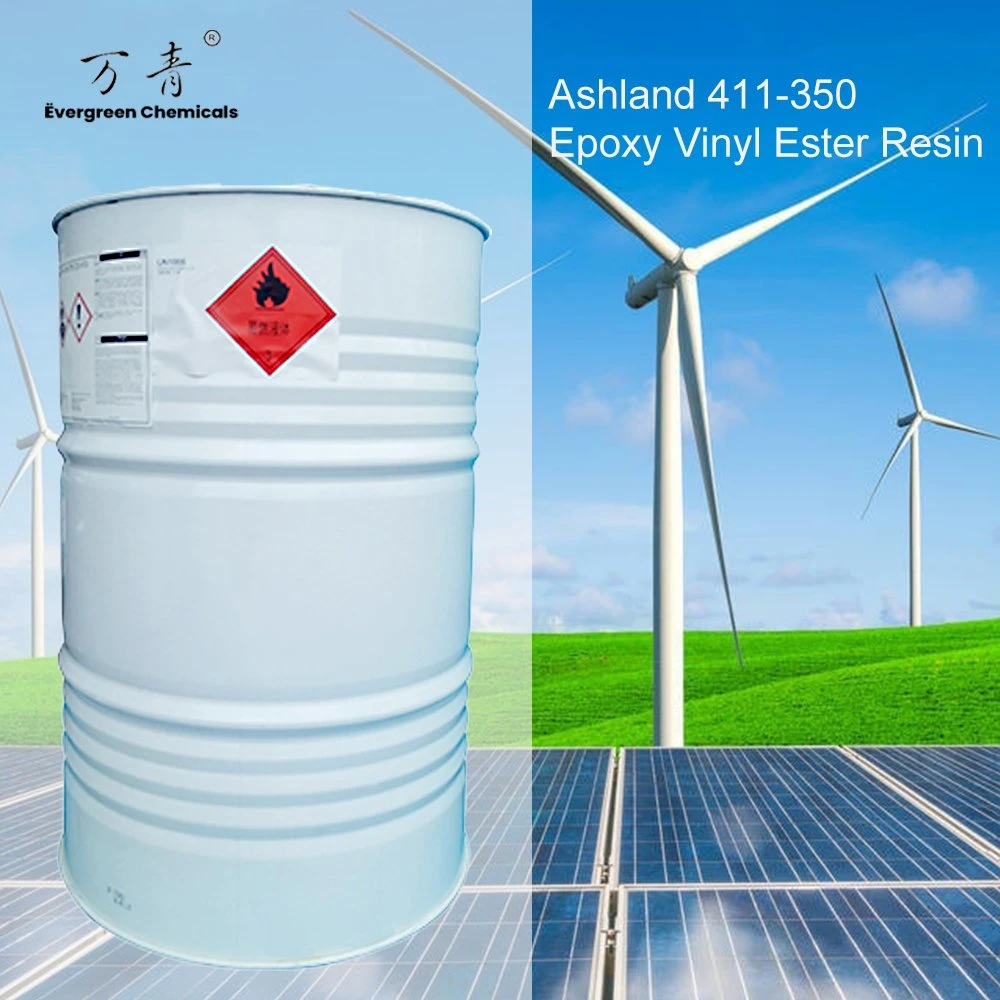
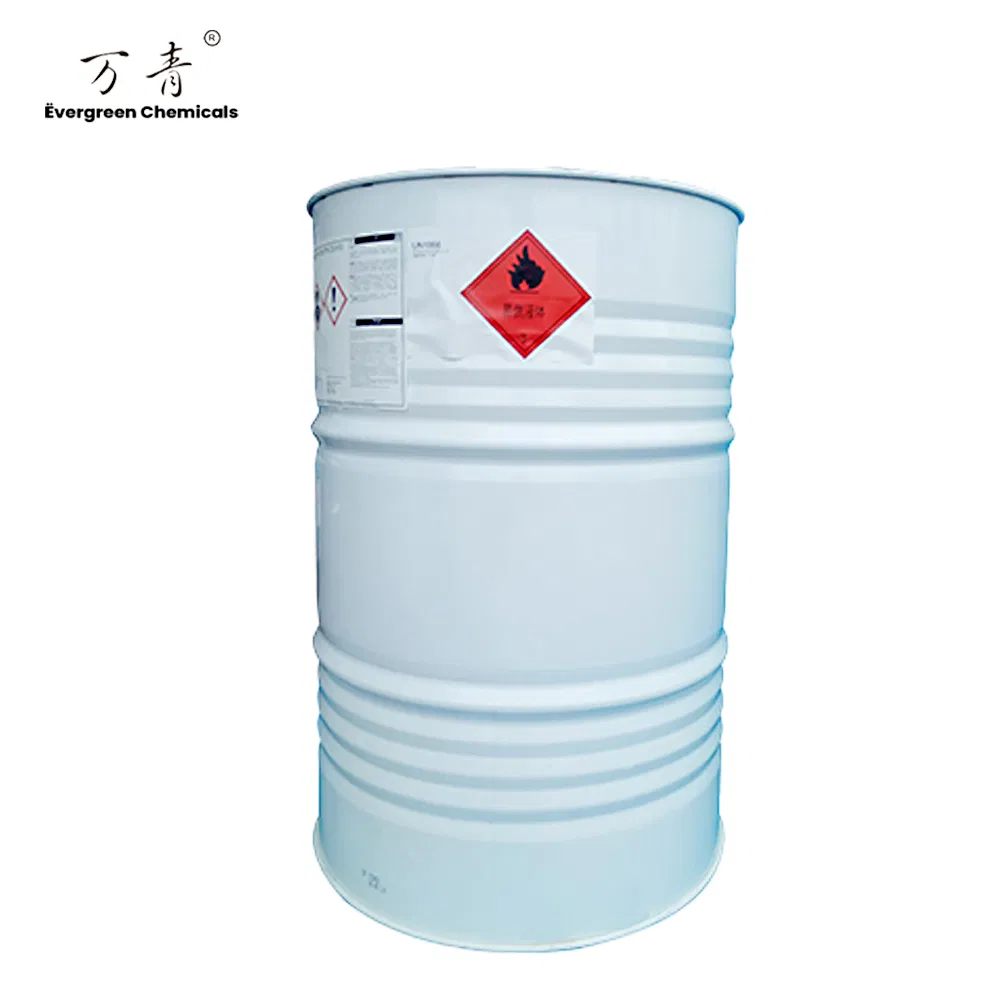
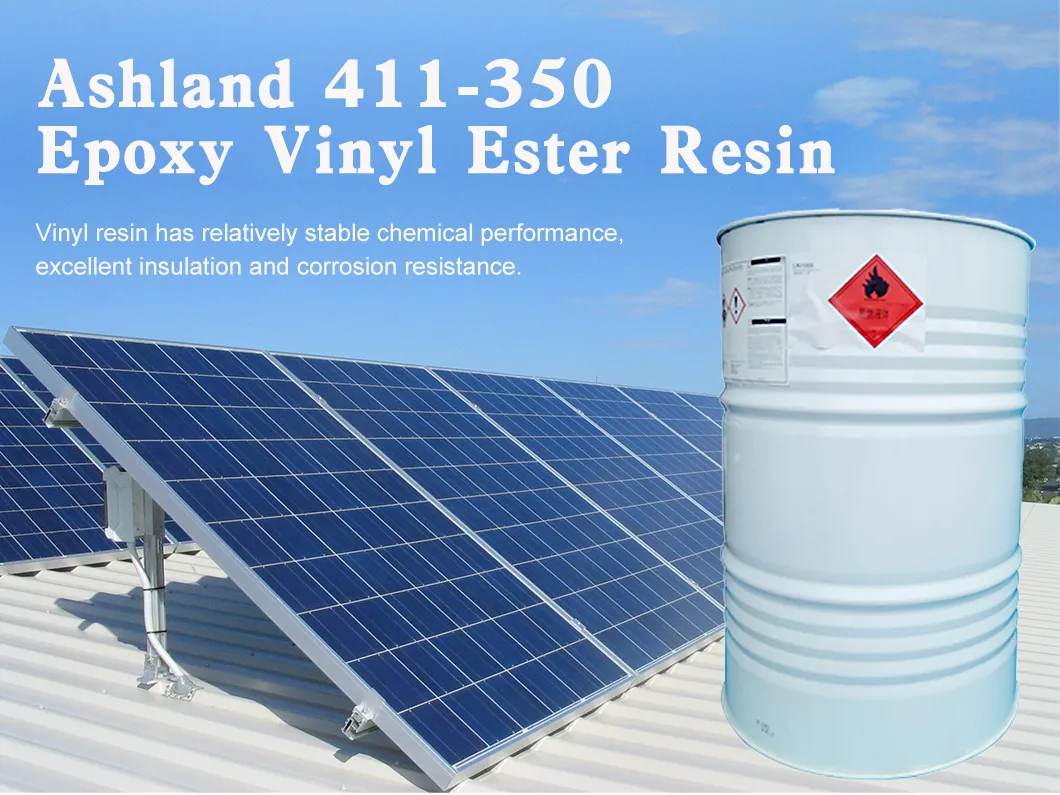
411-350 epoxy vinyl ester resin is based on bisphenol-A epoxy resin and has become the "industry standard" due to its wide range of end-use applications. Equipment fabricated with this resin has superior elongation, toughness, impact resistance, and less cracking due to cyclic temperature and pressure fluctuations.
Typical Liquid Resin Properties
| Property (at 25°C) |
Value |
Unit |
| Dynamic Viscosity | 370 | mPas (cps) |
| Kinematic Viscosity | 350 | cSt |
| Styrene Content | 45 | % |
| Density | 1.046 | g/ml |
Applications & Advantages
- 🚩 Industrial Use: Storage tanks, vessels, ducts, and pulp/paper operations.
- 🚩 Versatile Fabrication: Hand lay-up, spray-up, filament winding, pultrusion and transfer molding.
- 🚩 Chemical Resistance: Provides resistance to a wide range of acids, alkalis, bleaches, and solvents.

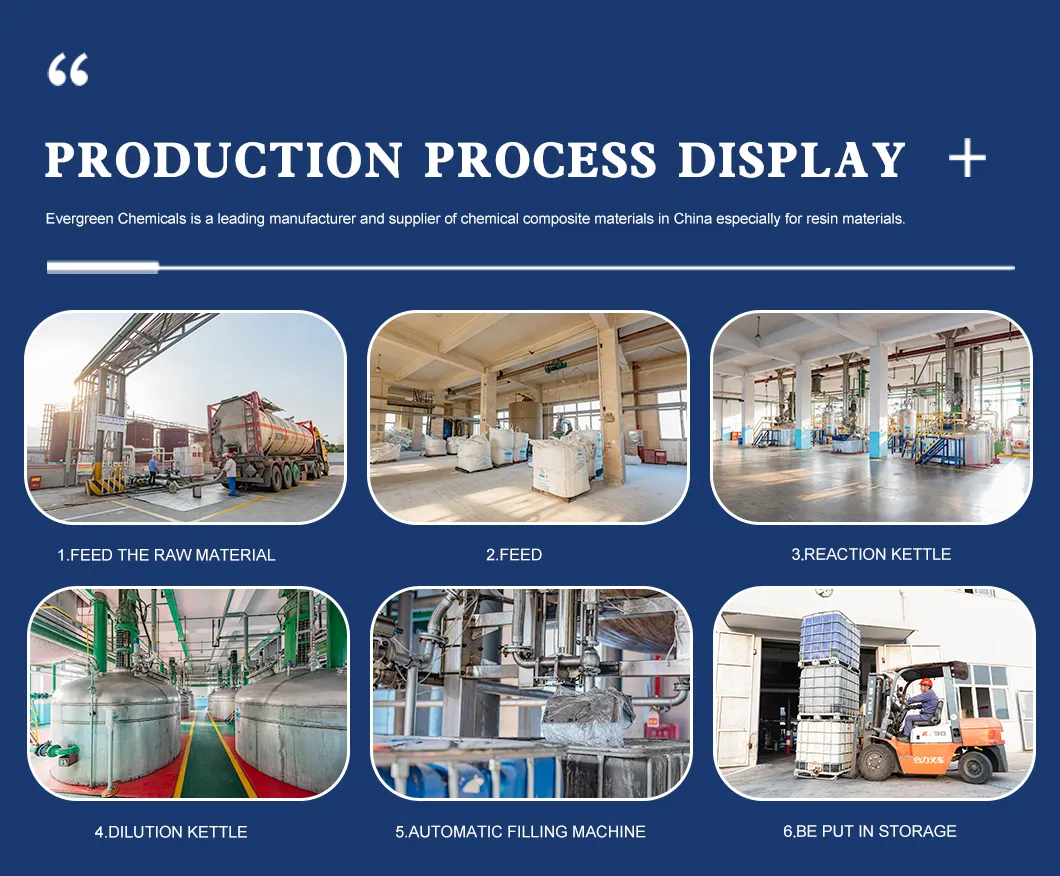
Production Process
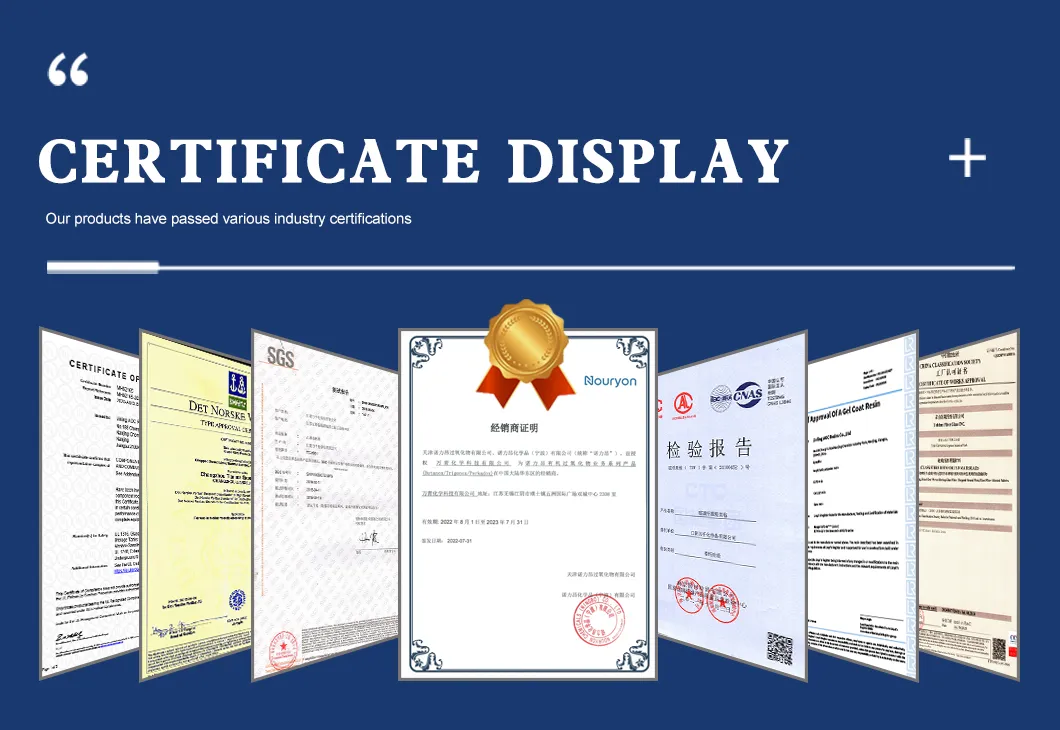
Certifications
FAQ
What are the storage requirements for this resin?
It is highly recommended that all material is stored at stable temperatures below 25°C (77°F). Avoid sunlight and keep sealed.
What fabrication techniques are suitable?
It is suitable for hand lay-up, spray-up, filament winding, pultrusion, and resin transfer molding.
Does this resin meet food contact standards?
The raw materials are listed as acceptable in FDA regulation Title 21 CFR 177.2420 for repeated use in contact with food.
What is the typical shelf life?
When stored correctly, the product remains within specifications for six (6) months from the date of manufacture.
What are the primary chemical resistances?
This resin provides superior resistance to various acids, alkalis, bleaches, and organic solvents.
 Shengchuang Building