1. Port Moresby Infrastructure & Commercial Concrete Landscape
Port Moresby, as the chief economic hub, maritime gateway, and capital city of Papua New Guinea (PNG), is undergoing an unprecedented infrastructure evolution. Driven by massive international investments in mineral resources, natural gas expanding operations (PNG LNG phase expansions), urban commercial growth around Waigani, and major maritime port modernization at Motukea Island, the demand for resilient construction materials has reached an all-time high.
However, the capital’s unique geographical position imposes extraordinary micro-climatic and mechanical stresses upon concrete structures. The combination of intense equatorial UV irradiation, high ambient humidity (frequently exceeding 85%), ambient temperature fluctuations exceeding 35°C, high atmospheric chloride deposition from the Coral Sea, and seismic activity creates a hostile environment for conventional Portland cement concrete.
Information Gain Insight: Standard concrete overlays applied in tropical coastal zones like Port Moresby routinely suffer from premature delamination, micro-cracking, and alkali-silica reaction (ASR) within 18 to 36 months if unreinforced by high-polymer binders or silica-fume microspheres. Our engineered concrete resurfacing materials directly solve these local chemical and thermal degradation mechanisms.
Key infrastructure bottlenecks in Port Moresby include:
Motukea Island Port Decks & Container Logistics Yards: Heavy container reach-stackers exerting wheel pressures over 105 kN cause intense point-loading wear, spalling, and surface erosion on concrete aprons.
Napa Napa Refinery & Industrial Storage Facilities: Chemical exposure coupled with heavy vehicle movement accelerates concrete dusting, carbonation, and deep structural pitting.
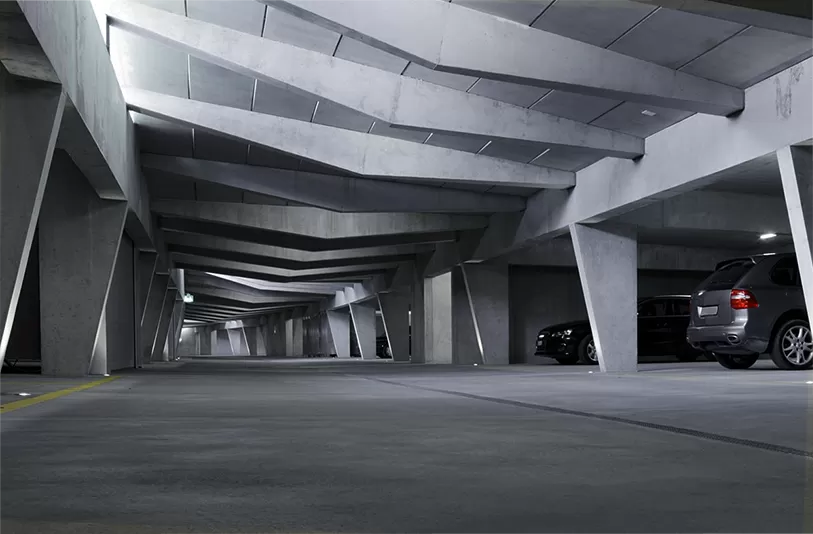
Konedobu & Downtown Commercial Plazas: Multi-story parking structures and high-footprint commercial walkways require rapid-setting, aesthetic, and non-slip resurfacing mortars that minimize operational downtime during repair cycles.
Thermal Expansion Mismatch: In Port Moresby’s climate, high daytime concrete surface temperatures (up to 55°C on exposed dark aggregate) followed by sudden rain squalls cause violent thermal shock, leading to overlay shearing when material thermal expansion coefficients do not align.
2. Global Standards vs. Regional Technical Requirements (ASTM C928 & EN 1504)
To ensure long-term structural integrity, concrete resurfacing compounds exported to or supplied within PNG must surpass baseline global benchmarks. International standards such as ASTM C928 (Standard Specification for Packaged, Dry, Rapid-Hardening Cementitious Materials for Concrete Repairs) and EN 1504-3 (Products and systems for the protection and repair of concrete structures) establish strict performance criteria.
Below is an engineering comparison matrix illustrating standard industry benchmarks versus our proprietary industrial-grade resurfacing formulations designed for the PNG market:
We are a national high-tech enterprise dedicated to the field of special concrete structure construction, bonding, reinforcement, and protection since 2008. We boast numerous patents covering bridge, tunnel, concrete structure reinforcement systems, and high-durability concrete repair technologies.
Our comprehensive product portfolio includes Ultra-High Performance Concrete (UHPC) cladding panels, concrete admixtures, specialized non-shrink grouts, epoxy resins, polymer resurfacers, and structural strengthening carbon-fiber composites designed for global extreme environments.
Ultra-High Performance Concrete (UHPC) represents the cutting edge of material science in concrete rehabilitation. By eliminating coarse aggregate and optimizing particle packing density at the nanometer scale (using silica fume, micro-quartz flour, and polycarboxylate ether superplasticizers), UHPC overlays achieve flexural strengths exceeding 18 MPa and compressive strengths upward of 120 MPa when fully cured.
For Port Moresby infrastructure managers, utilizing polymer-modified cementitious compounds and UHPC overlays reduces overall material thickness requirements by up to 60%. A thin-bed overlay of 10mm to 15mm of our high-performance resurfacing formulation provides equivalent or superior load capacity compared to 50mm of conventional concrete, significantly reducing dead load on elevated bridge decks and multi-tier parking garages across PNG.
Silane-Polymer Modification
Integrates latex polymers and hydrophobic silane molecules to block water absorption, preventing tropical moisture ingress and chemical staining.
Micro-Fiber Reinforcement
Incorporates synthetic monofilament micro-fibers that arrest plastic shrinkage cracking during rapid hydration under PNG's hot sunlight.
Rapid Traffic Return
Formulated with high-early-strength sulfoaluminate cements, allowing light foot traffic in 3 hours and heavy vehicle loads in 24 hours.
4. Localized Port Moresby Application Scenarios & Engineering Practices
Concrete resurfacing in PNG requires specialized field execution methodologies due to rapid moisture evaporation caused by ambient temperature and equatorial winds. Below are primary local application scenarios and engineered repair steps:
A. Heavy Logistics & Marine Terminal Rehabilitation (Motukea & Badili Industrial Zones)
In high-salinity maritime logistics zones, heavy forklift traffic and salt spray lead to severe surface spalling, exposing internal steel reinforcement.
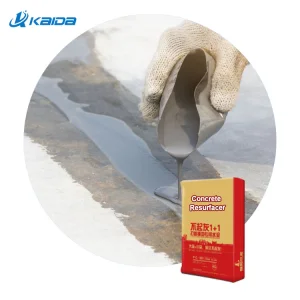
Surface Preparation: Hydro-abrading or shot-blasting the substrate to achieve a Concrete Surface Profile (CSP) of 5 to 7 according to ICRI guidelines. All loose concrete and corrosion products are removed.
Substrate Saturation: The parent concrete must be saturated to a Saturated Surface Dry (SSD) condition for a minimum of 4 hours prior to application. This prevents the dry porous substrate from sucking hydration water out of the fresh repair overlay.
Curing Safeguards: Immediate application of an aliphatic alcohol film evaporative retarder followed by wet burlap curing to control heat of hydration.
B. Commercial & Residential Urban Developments (Waigani & Boroko)
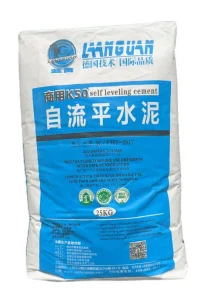
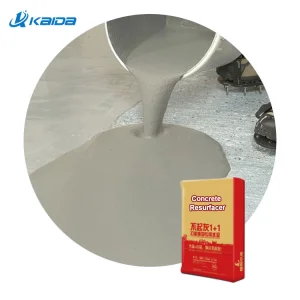
For multi-family residential complexes, commercial showrooms, and parking facilities requiring long-lasting aesthetics, low-VOC self-leveling compounds like our Durable Flooring Leveling Material provide a seamless, dust-proof finish ready to receive epoxy coatings, tile adhesives, or decorative sealers.
Turnkey Project Solutions
Integrated Engineering Support for PNG Contractors
From initial substrate structural analysis and core testing to site mixing supervision, our technical team provides end-to-end guidance. We supply custom color mixes, retarder admixtures specifically calibrated for Port Moresby high-temperature mixing, and specialized tools for rapid application.
Exporting technical mortars to Papua New Guinea presents distinct supply chain challenges: high ocean freight humidity, extended port transit times, and potential shelf-life degradation. Shengchuang / SINO-SINA implements strict quality control protocols to guarantee pristine material performance upon arrival at Port of Motukea:
Multi-Layer Moisture-Barrier Packaging: Bags are packed in heavy-duty polyethylene inner liners wrapped in 4-ply craft paper with UV-resistant outer stretch shrink-wrap. This provides 100% protection against atmospheric moisture intrusion during tropical maritime shipping.
Extended Shelf-Life Formulations: Moisture-repellent anti-caking agents ensure chemical stability for 12 to 18 months under tropical warehouse conditions.
Batch Traceability & Independent Testing: Every manufacturing batch is certified in-house and backed by third-party mill test reports (MTR) verifying compliance with ASTM C928 and EN 1504 requirements.
Local Mixing Calibration Charts: Detailed dosage protocols adjusted for local Port Moresby tap water temperatures (which often exceed 28°C) ensure predictable setting times without premature flash-setting.
Looking toward the next decade of sustainable infrastructure buildout in PNG and the South Pacific, our R&D roadmap focuses on three core pillars:
Bio-Mimetic Self-Healing Mortars: Integrating micro-encapsulated crystalline catalysts that reactivate in the presence of water to automatically seal micro-cracks up to 0.4mm wide, drastically extending structure service life in coastal rainy environments.
Carbon-Negative Mineral Binders: Substituting standard Portland cement clinker with up to 60% industrial pozzolanic upcycled materials and geopolymer matrices, reducing embodied carbon dioxide emissions by over 45% while boosting acid and sulfate resistance.
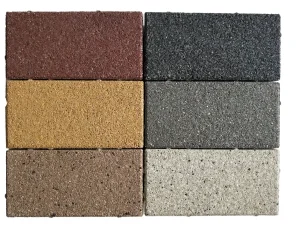
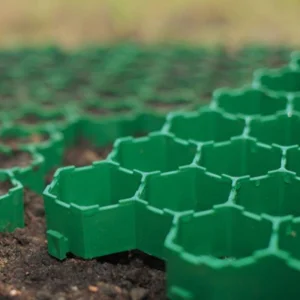
Pervious Green Infrastructure Systems: Utilizing eco-friendly permeable paving technologies like our Ceramic Water Permeable Paver to manage tropical storm runoff in urban Port Moresby, reducing flash flooding and recharging local aquifers.
Q1: How do extreme ambient temperatures in Port Moresby (30°C–35°C) affect setting times of resurfacing materials?
High temperatures accelerate the hydration reaction of cementitious mortars, reducing working time (pot life) from 30 minutes down to 10–15 minutes. To counteract this in PNG, our materials are formulated with specialized hydration control retarders. We also recommend mixing with chilled water (below 20°C) and shading the application area during peak solar hours.
Q2: Can your concrete resurfacers withstand salt spray corrosion near Motukea Port and coastal industrial areas?
Yes. Our polymer-modified and micro-silica fortified concrete resurfacers possess extremely low permeability (< 500 Coulombs under ASTM C1202). This dense pore structure prevents airborne chloride ions from penetrating through to the underlying reinforced steel, effectively stopping delamination and rebar rust expansion.
Q3: What is the minimum thickness required for heavy vehicle driveway or loading bay resurfacing?
For heavy industrial traffic (forklifts, 40ft container trucks), our high-impact resurfacing mortars can be applied at a minimum feather-edge thickness of 5mm up to 50mm in a single lift. For structural structural repair subjected to high point-loads, a minimum thickness of 10mm–15mm is recommended.
Q4: How are products shipped to Papua New Guinea to avoid moisture damage?
All materials dispatched to Port Moresby are wrapped in sea-worthy, heavy-duty polyethylene barrier packaging and shrink-wrapped on reinforced wooden pallets. Full Container Load (FCL) shipments from our manufacturing facility include desiccant packs to prevent condensation damage during ocean transit across equatorial waters.
Q5: What surface preparation is necessary before applying the concrete patch or overlay?
Proper surface preparation is crucial. The substrate must be mechanically abraded (shot-blasting, scarifying, or high-pressure water blasting) to remove all dirt, oil, laitance, and curing compounds. The concrete must be thoroughly cleaned and pre-saturated with water (SSD condition) before placing the material.
Q6: Do you provide on-site technical consulting or contractor training in PNG?
Yes. We provide complete technical documentation, virtual engineer video support, and on-site field support for major infrastructure projects in Port Moresby and across Central Province to ensure proper mixing ratios, application techniques, and quality assurance.
Product Catalog
Complete Portfolio of Concrete Repair & Resurfacing Solutions
Factory-direct supply chain serving civil contractors, industrial developers, and commercial builders in Port Moresby.
Partner with a Leading Concrete Material Manufacturer
Ready to enhance your infrastructure projects in Port Moresby and PNG with ultra-durable, tropical-certified concrete resurfacing systems? Request technical datasheets, site samples, or custom project quotes today.
 Shengchuang Building