1
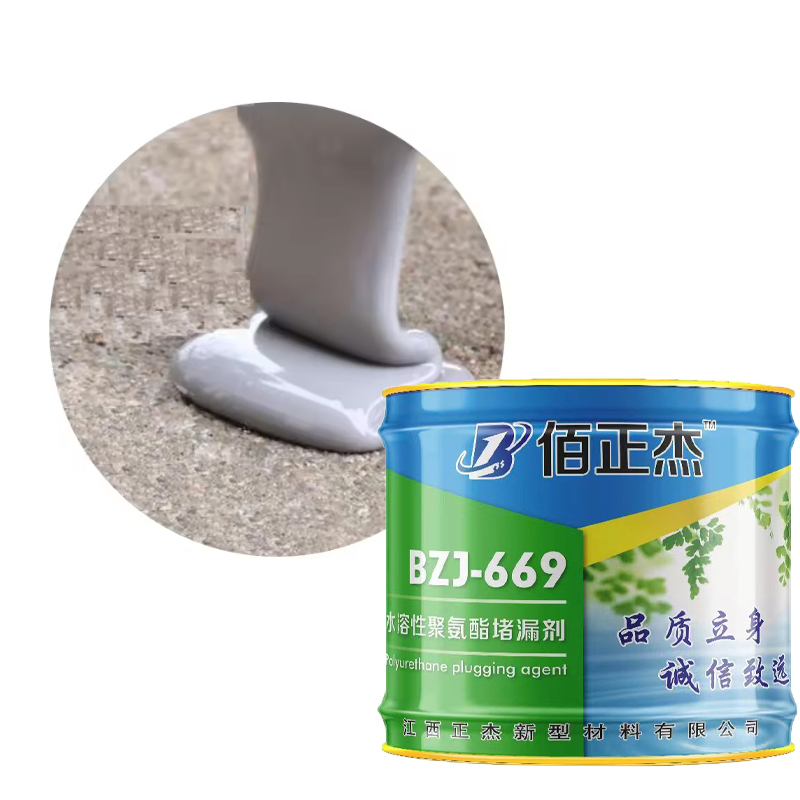
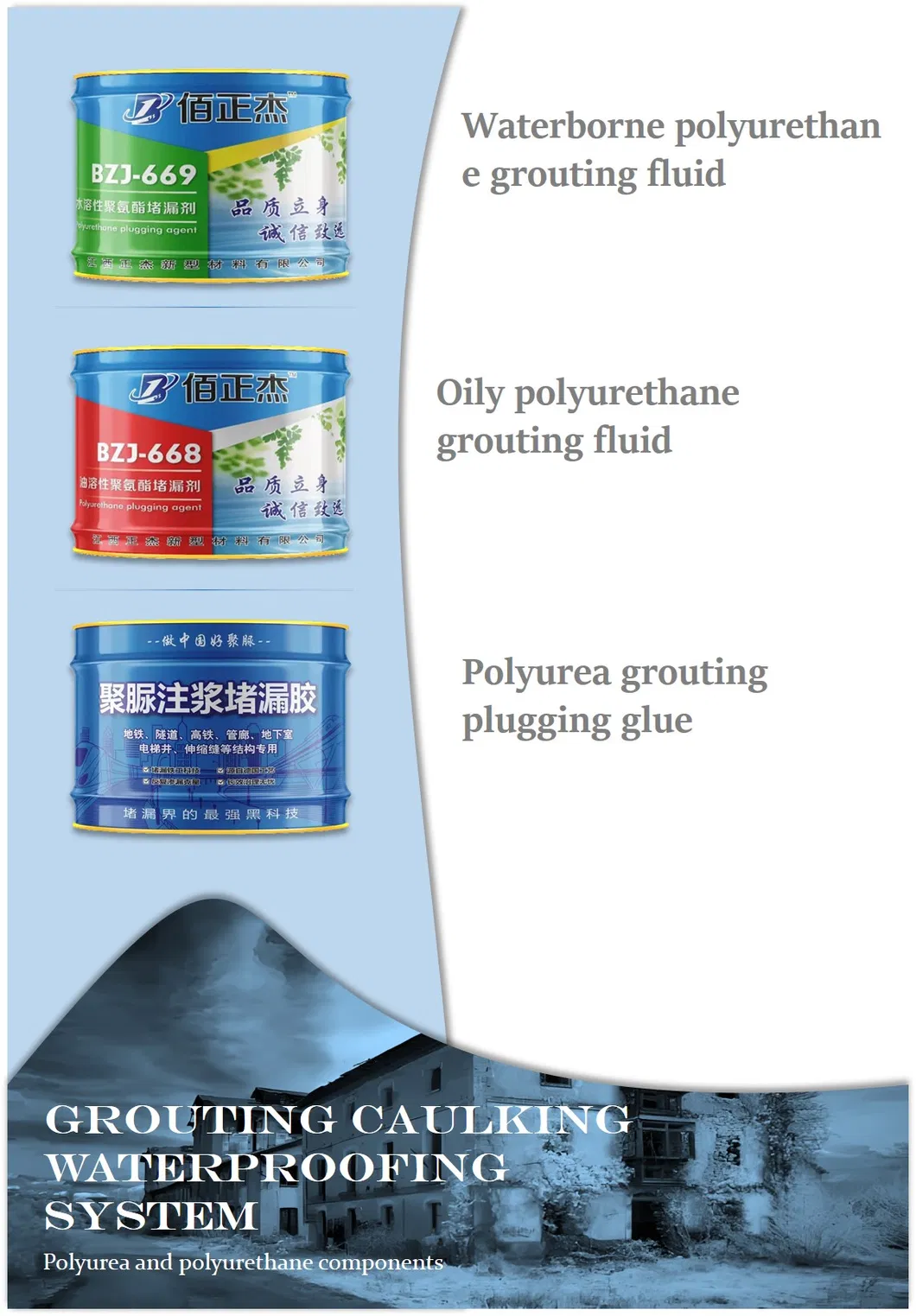
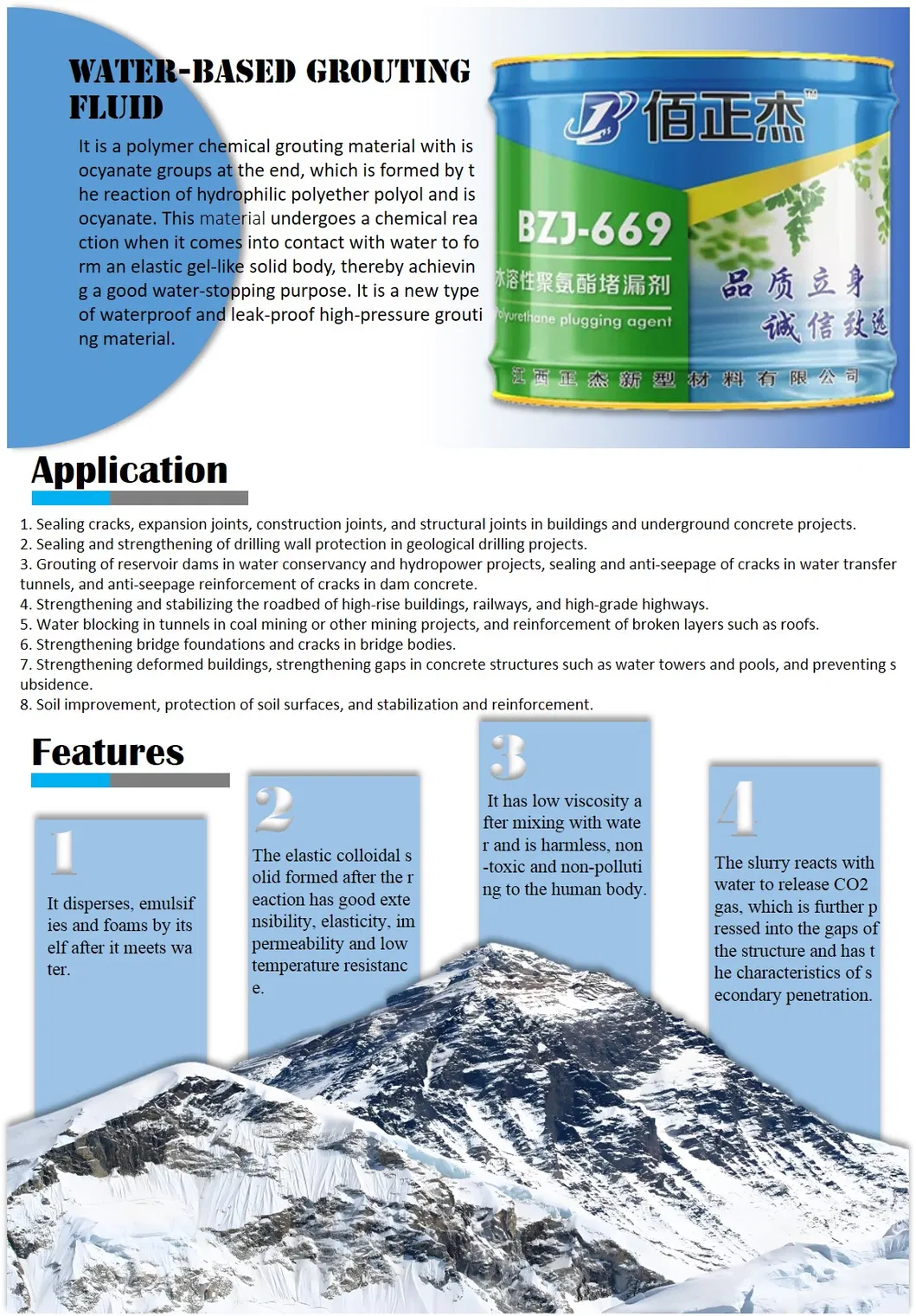
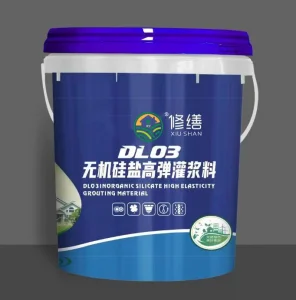
Water-Based Grouting Fluid
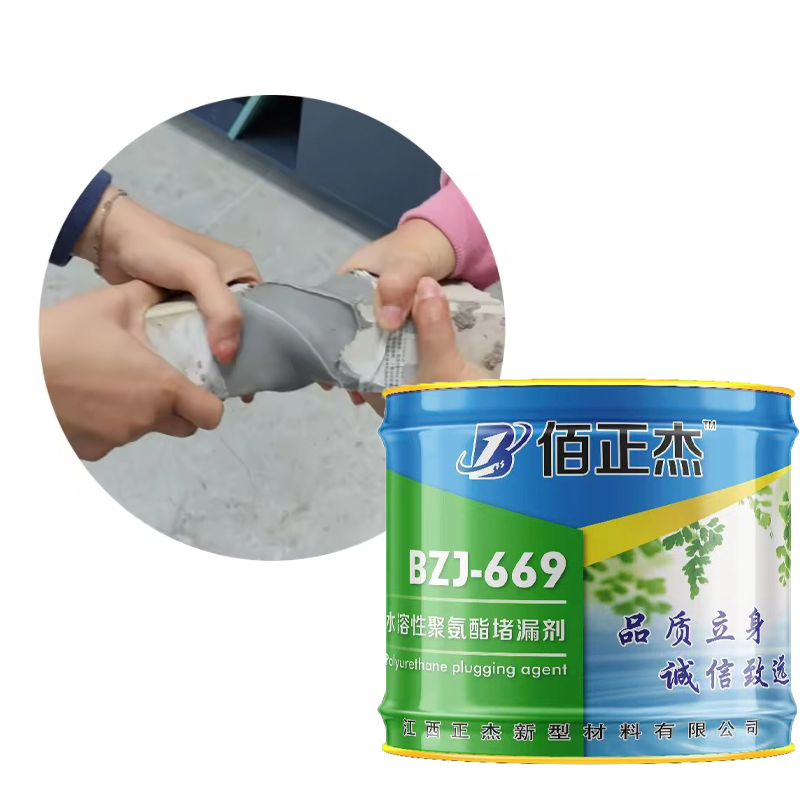
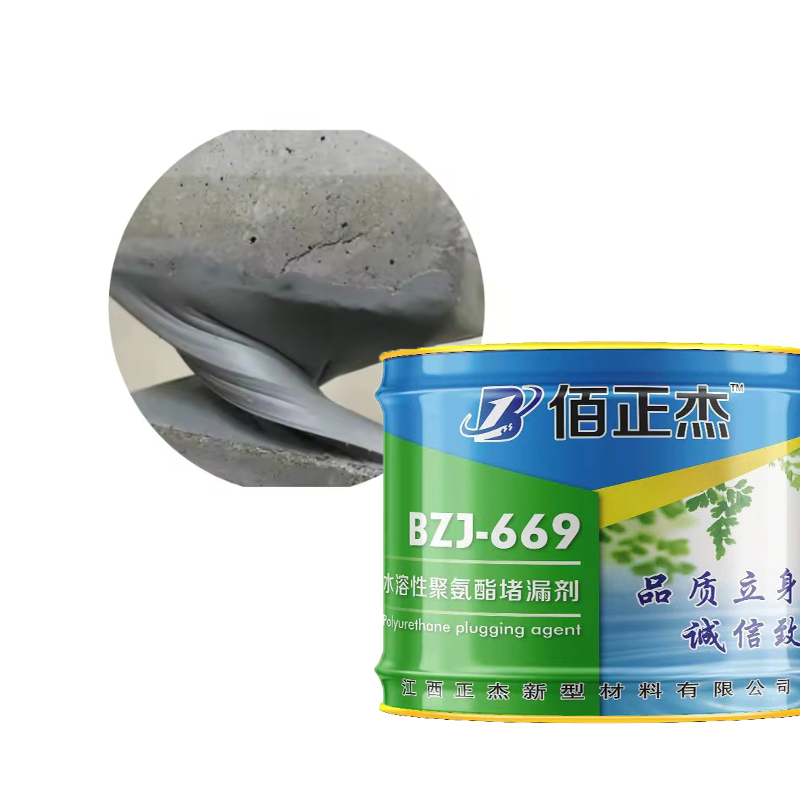
It is a polymer chemical grouting material with isocyanate groups at the end, formed by the reaction of hydrophilic polyether polyol and isocyanate. This material undergoes a chemical reaction upon contact with water to form an elastic gel-like solid body, achieving high-efficiency water-stopping.
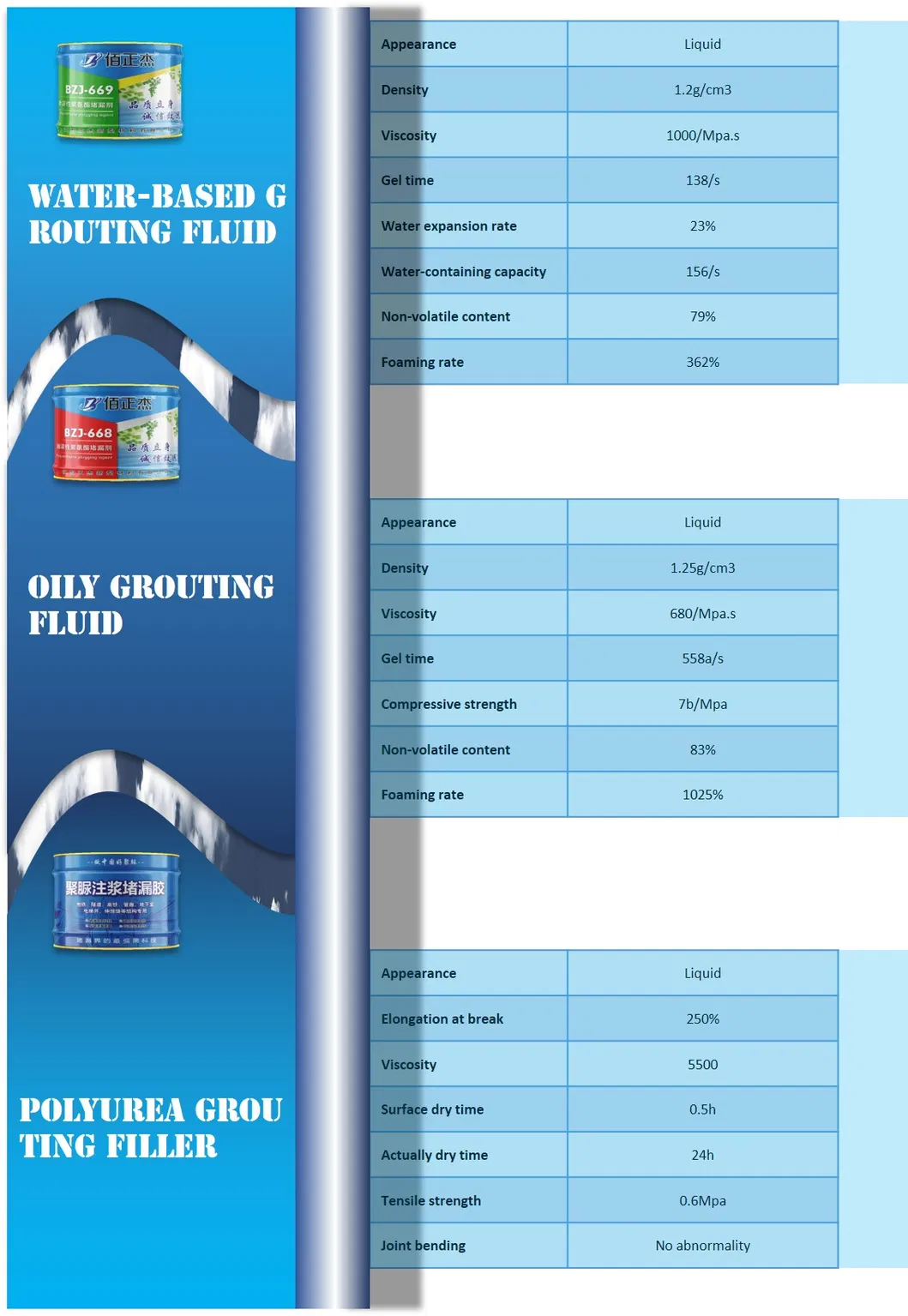
| Appearance | Liquid |
| Gel Time | 138/s |
| Water-containing Capacity | 156/s |
| Foaming Rate | 362% |
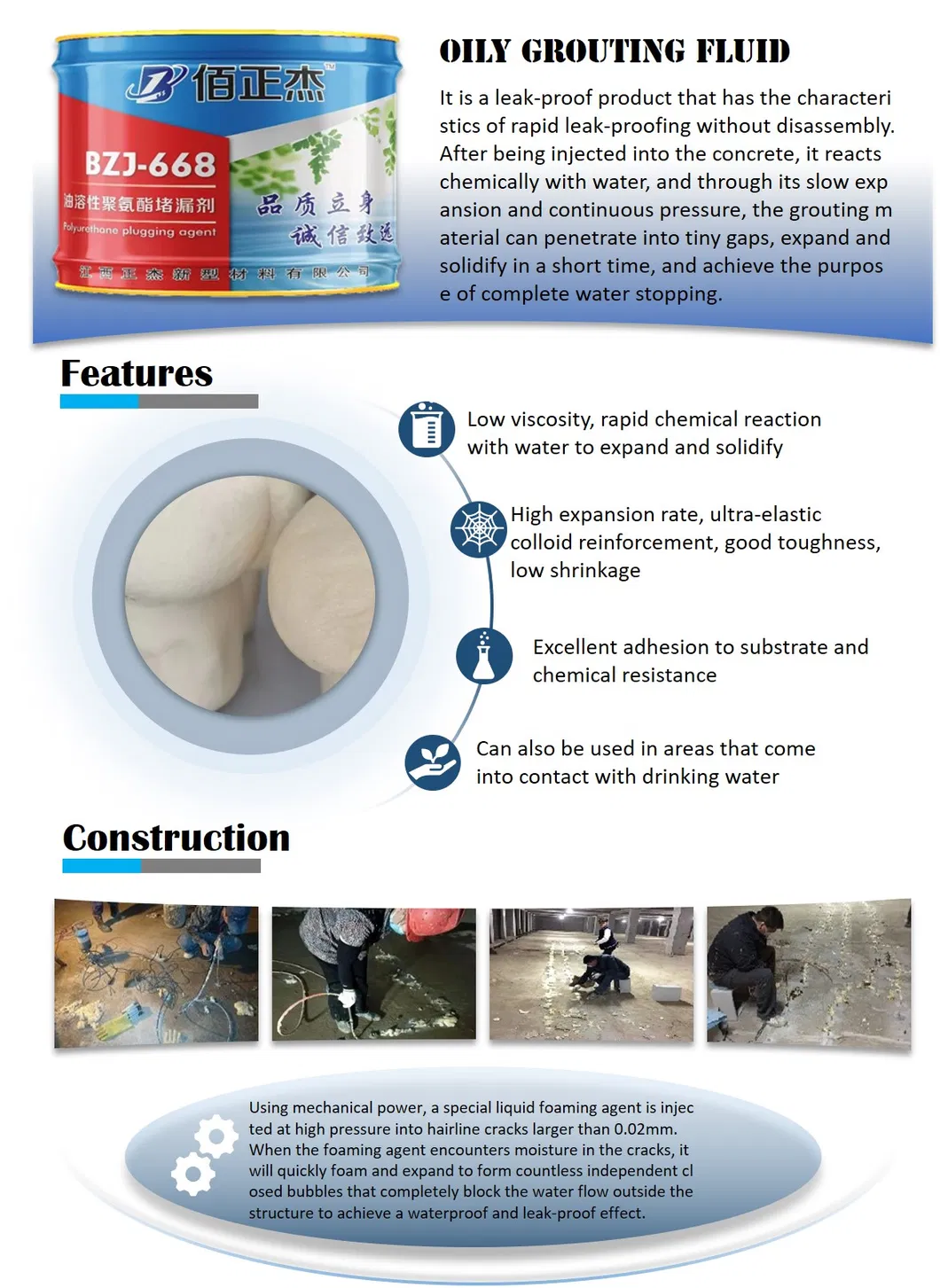
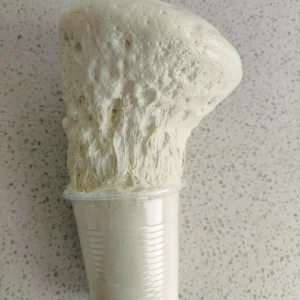
A rapid leak-proof product designed for use without disassembly. Injected into concrete, it reacts with water through slow expansion and continuous pressure, penetrating tiny gaps to solidify quickly.
| Density | 1.25g/cm3 |
| Viscosity | 680/Mpa.s |
| Compressive Strength | 7b/Mpa |
| Foaming Rate | 1025% |
3
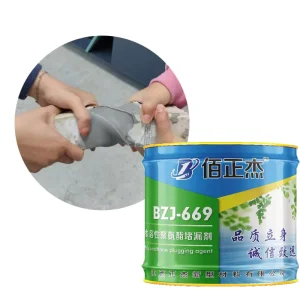
Polyurea Grouting Filer
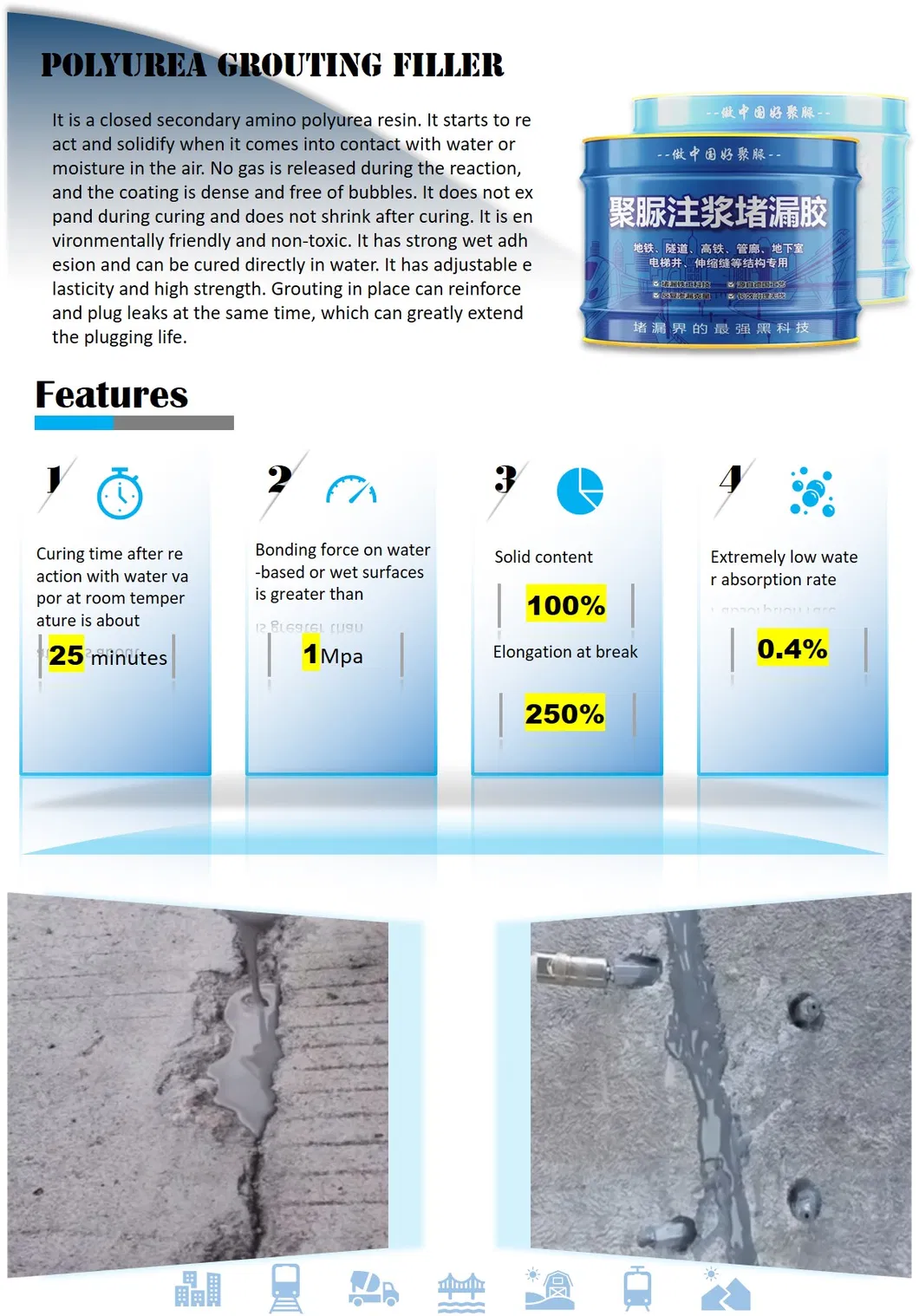
A closed secondary amino polyurea resin that solidifies upon contact with moisture. Environmentally friendly and non-toxic, it releases no gas during reaction, resulting in a dense, bubble-free coating with strong wet adhesion.
| Elongation at Break | 250% |
| Surface Dry Time | 0.5h |
| Tensile Strength | 0.6Mpa |
| Joint Bending | No Abnormality |
?
Frequently Asked Questions
How does the Water-Based Grouting Fluid work?
It reacts chemically with water to expand and form an elastic gel solid, which effectively blocks water flow in cracks and joints.
Is the Polyurea Grouting Filer safe for the environment?
Yes, it is formulated to be environmentally friendly and non-toxic, releasing no harmful gases during the curing process.
Can these materials be used for underwater repairs?
Specifically, the Polyurea Grouting Filer has strong wet adhesion and can be cured directly in water.
What is the advantage of OIY Grouting Fluid?
It provides rapid leak-proofing without the need for structural disassembly, using slow expansion to fill even the smallest gaps.
What is the foaming rate of these products?
The Water-Based Grouting Fluid has a foaming rate of 362%, while the OIY Grouting Fluid reaches up to 1025% for maximum coverage.
What are the primary applications for these grouting materials?
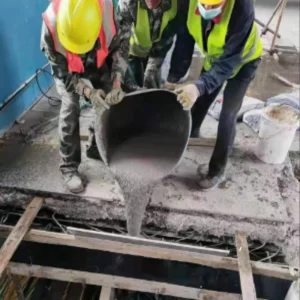
They are widely used in tunnels, dams, bridge foundations, railways, and underground concrete structures to stop leaks and reinforce stability.
 Shengchuang Building