 Shengchuang Building
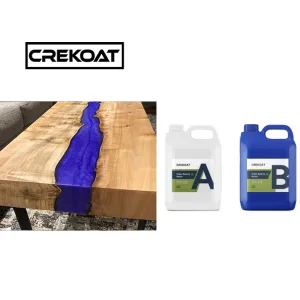
Explore our core engineering materials, high-strength admixtures, and precision sealants engineered to meet global compliance standards.
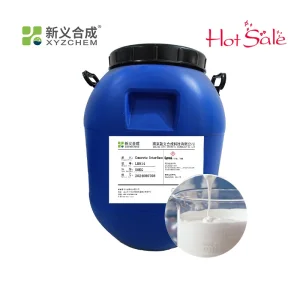
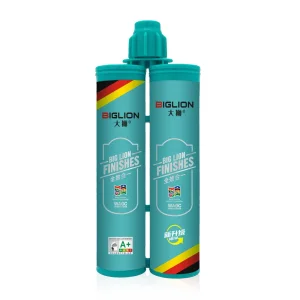
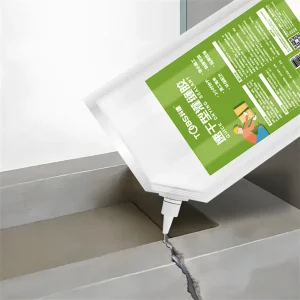
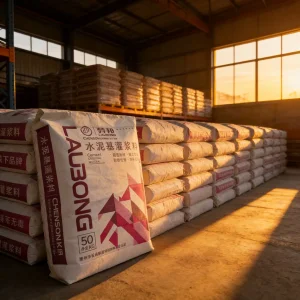
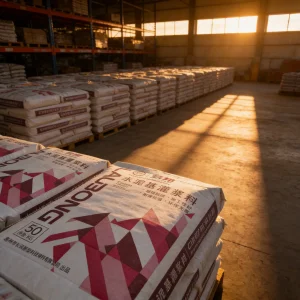
Shengchuang Concrete (SINO-SINA) is a national high-tech enterprise committed to structural reinforcement, specialized architectural coatings, concrete repair systems, and polymer bonding agents. Operating at the intersection of material science and construction engineering, we develop and distribute technologies that enhance structural life cycles while meeting demanding aesthetic criteria.
Our complete engineering portfolio includes high-performance concrete admixtures, specialized structural mortars, non-shrink grouts, clear epoxy casting resins, and advanced waterproofing membranes. By control-formulating each product class, we ensure chemical compatibility across composite building systems—minimizing failures at critical joints, interfaces, and structural boundaries.
Through systematic R&D and patent-backed methodologies in bridge, tunnel, and marine structural protection, we supply materials engineered for extreme mechanical stresses and environmental exposures. Our technical assistance team collaborates directly with designers, structural consultants, and field supervisors to provide bespoke solutions from formulation to onsite installation.
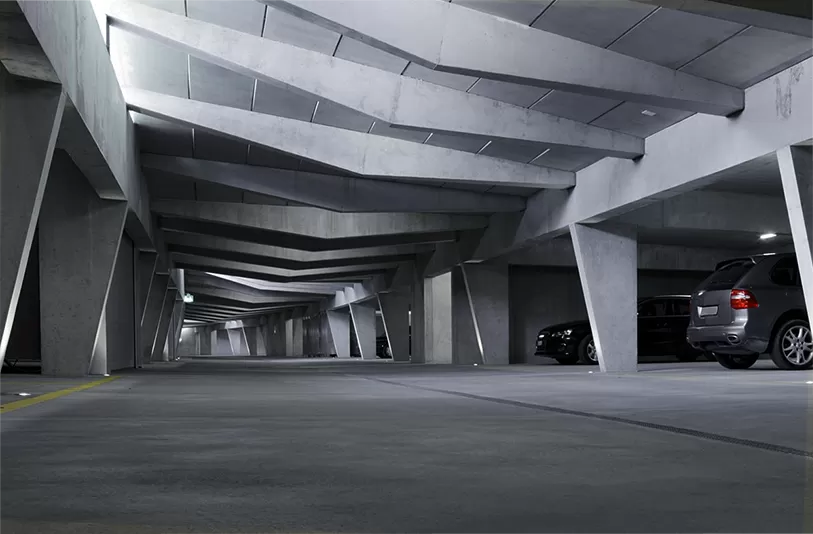
Achieving structural balance requires precise control over cement hydration kinetics, polymer cross-linking, and aggregate pack optimization.
Polycarboxylate Ether (PCE) superplasticizers leverage steric hindrance rather than electrostatic repulsion alone. This molecular configuration disperses cement particles with extreme efficiency, allowing water-to-cement (w/c) ratios to drop below 0.25 while maintaining self-leveling flowability. This minimizes capillary voids and yields ultra-dense matrices with compressive strengths exceeding 120 MPa.
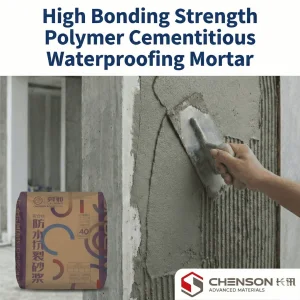
Incorporating synthetic acrylic copolymers and modified siloxanes alters the interfacial transition zone (ITZ) between aggregates and the cementitious paste. The polymers form a continuous co-matrix that bridges micro-cracks, reduces moisture permeability, and guarantees a bond strength that frequently exceeds the tensile strength of the host concrete substrate.
Shrinkage-compensating chemical additions combined with grade-optimized micro-silica eliminate early-age plastic shrinkage and long-term drying shrinkage. This volumetric control prevents structural micro-cracking, keeps joint sealants intact, and stops water or chloride ions from penetrating under pressure.
Years of R&D Specialization
Global Export Destinations
MPa Compressive Strength UHPC
Proprietary Material Patents
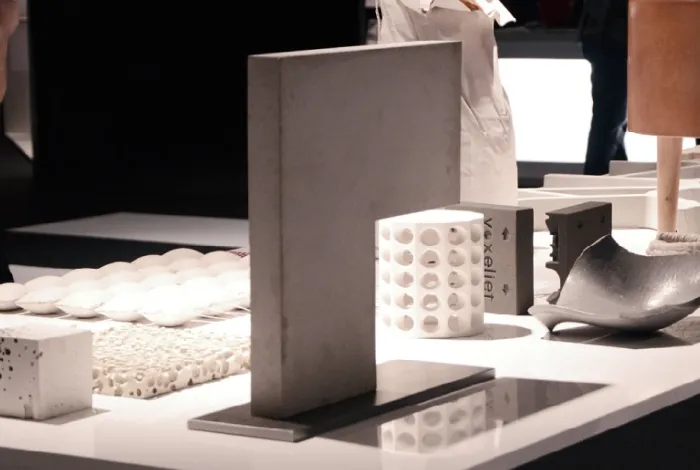
Ultra-High-Performance Concrete (UHPC) represents a major leap in architectural cladding technology. UHPC cladding panels utilize a dense, cementitious composite reinforced with high-strength micro-fibers, yielding a material with high flexural tensile capacity and impact resistance.
Unlike traditional architectural precast concrete, UHPC panels can be cast in thin profiles—often between 15mm and 35mm—without conventional steel rebar reinforcement. This reduces dead loads on support structures, simplifies installation mechanics, and gives architects the freedom to design complex geometries, deep textures, and perforated screens.
How our material formulations are tailored to meet unique climatic challenges and code requirements across key global markets.
For high-traffic hubs, warehouses, and airport terminals, we supply self-leveling underlayments, high-strength grouts, and polyurea-epoxy floor coatings. These systems cure rapidly, offer high abrasion resistance, and require minimal maintenance, shortening project timelines and reducing lifecycle costs.
Offshore infrastructure demands protection against chloride ingress and wave erosion. Our siloxane-modified joint sealants, hydrophobic interface agents, and silica-fume reinforced mortar mixes prevent salt crystallization and reinforcing steel corrosion in tidal zone applications.
For colder climates, we integrate micro-pore air-entraining agents that distribute air bubbles through the concrete matrix. This provides expansion chambers for freezing water, preventing spalling, scaling, and cracking during repeated freeze-thaw cycles.
Our centralized manufacturing base leverages local raw materials, fully automated synthesis lines, and rigorous quality control protocols to ensure reliable production. This supply chain structure offers distinct advantages for large-scale international projects:
We run a multi-tier QC system spanning raw material testing, online process control, and performance verification in our own laboratories:
| Test Domain | Standard Met | Minimum Acceptable Limit |
|---|---|---|
| PCE Active Content | GB/T 8077 | 50.0% ± 0.5% |
| Grout Compressive (28d) | ASTM C942 | ≥ 80 MPa |
| Epoxy UV Stability | ASTM G154 | ΔE ≤ 1.5 (1000h) |
Our ongoing research pathways are designed to address the construction challenges of tomorrow, focusing on sustainability, intelligence, and speed.
We are currently developing crystalline admixtures that react with moisture to seal micro-cracks autogenously. When water penetrates a crack, these chemical catalysts form calcium silicate hydrates (C-S-H) that seal the fissure, preventing reinforcing steel degradation and maintaining water resistance.
By substituting traditional Portland cement clinker with ground granulated blast-furnace slag (GGBS), fly ash, and active calcined clays, we are reducing the carbon footprint of our grout and mortar formulations. This allows projects using our materials to secure additional LEED and BREEAM credits.
With the rise of 3D concrete printing (3DCP), we are modifying superplasticizers and set accelerators to achieve exact buildability and open-time parameters. This lets contractors build complex, unsupported architectural profiles without using formwork.
Discover our range of high-performance tile grouts, self-leveling compounds, polymer mortars, and advanced geotextiles.
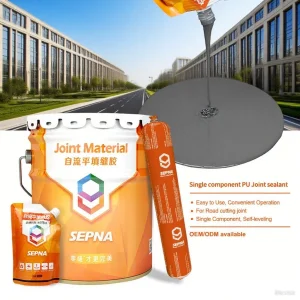
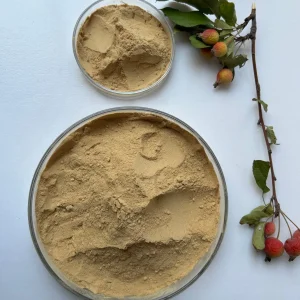
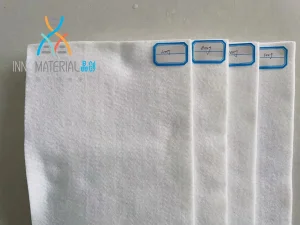
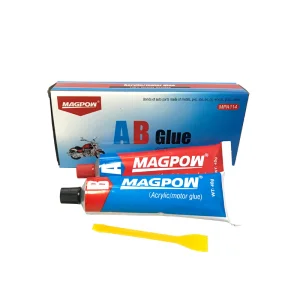
Deep-dive chemical and engineering answers to frequently asked technical questions regarding specialty concrete and resin installations.
Traditional Sulfonated Melamine Formaldehyde (SMF) admixtures rely primarily on electrostatic repulsion to disperse agglomerated cement particles. While effective, this effect can quickly fade, leading to rapid slump loss. Polycarboxylate Ether (PCE) superplasticizers feature a comb-like copolymer structure. The main carboxylate chain anchors to the hydrating cement grains, while long polyethylene glycol side chains extend outwards to create steric hindrance. This physical barrier prevents cement particles from re-agglomerating, maintaining high concrete workability at lower water-to-cement ratios and for longer durations.
Deep pour epoxies are formulated with slow-reacting cycloaliphatic amine hardeners. This extends the curing window, allowing heat generated by the exothermic curing reaction to escape slowly rather than accumulating and causing thermal stress. UV stabilization is achieved using a dual-action system: a Hindered Amine Light Stabilizer (HALS) traps free radicals generated by UV exposure, while a benzotriazole-based UV absorber converts UV light into harmless thermal energy. This prevents structural degradation and yellowing over long-term exposure.
Ultra-High-Performance Concrete (UHPC) panels boast an extremely compact micro-structural matrix, typically achieved by optimizing particle packing down to the nanometer scale and maintaining a water-to-binder ratio of under 0.20. While standard GFRC depends on glass fibers to resist tension, UHPC integrates high-strength steel or structural polymer micro-fibers, which dramatically improves its fracture toughness and flexural strength. UHPC exhibits near-zero capillary absorption, making it highly resistant to carbonation, freeze-thaw cycles, and chloride exposure, while allowing for thinner panel profiles.
Modified siloxanes (often hybrid polymer sealants) combine the mechanical toughness of polyurethanes with the UV and weather resistance of silicones. Polyurethane sealants tend to degrade under UV radiation, leading to chalking, embrittlement, and cracking over time. Modified siloxanes contain stable silicon-oxygen bonds that resist solar radiation. They cure through interaction with atmospheric moisture without bubbling or gassing, even when applied to damp concrete substrates, and maintain their elastic properties across a wide temperature range.
When applying new repair mortar to old, cured concrete, the dry substrate can absorb water from the fresh mortar, disrupting the hydration process at the contact plane. This creates a weak interface transition zone (ITZ) prone to delamination. An adhesive concrete interface agent seals the pores of the old concrete, preventing rapid moisture loss. The polymer dispersion forms a flexible, bridging film that bonds chemically to both the old substrate and the fresh mortar, distributing shear stresses evenly across the joint.
Air-entraining agents introduce millions of microscopic, closely-spaced air bubbles into the concrete paste during mixing. When water inside concrete freezes, it expands by roughly 9% in volume, generating significant internal hydraulic pressure. The entrained air bubbles act as expansion chambers, letting the freezing water expand without fracturing the concrete matrix. For effective protection, the bubbles must be small (typically 10 to 250 microns) and spaced close together (a spacing factor of under 0.2 mm) throughout the cement paste.